
I stumbled across a question on Reddit's r/TrueFilm that stopped me scrolling: "What Christmas movie scenes actually give you that feeling?"
The responses were fascinating. Not because everyone agreed, but because they didn't. One person needed the church scene from Home Alone - Kevin McCallister sitting with Old Man Marley whilst "O Holy Night" plays, that quiet moment of grace in the middle of slapstick chaos. Another found their Christmas truth in The Ice Harvest, a bleak noir where the holiday becomes a backdrop for discomfort and mild existential dread.
That's when it clicked. We've been asking the wrong question.
Christmas doesn't hit the same for everyone. Some crave comfort and nostalgia. Others need Bill Murray's cynical breakdown in Scrooged or the uncomfortable family dynamics of Christmas Vacation. Some are wrestling with loss, looking at Judy Garland's bittersweet "Have Yourself a Merry Little Christmas" like it's a mirror. And that's normal.
Cinema reflects all of it. The warm and fuzzy exists alongside the melancholic, the cynical, the messy, the complicated. The beauty of nostalgic Christmas films from the 1960s through 2000s is that they offer something for every emotional need.
We've organised this piece by emotional register, not "best" rankings. Find the scene that meets you where you are.
That's the real Christmas magic - not perfection, but recognition.
A quick note: whilst RewindZone typically focuses on the 1960s-2000s era, we've included a handful of pre-1960s classics - It's a Wonderful Life, Meet Me in St. Louis, White Christmas - because these films cast such long shadows over everything that followed. They're the DNA of Christmas cinema.
Quiet Reflection & Spiritual Moments
For those who need peace amid the chaos
Sometimes Christmas feels like warfare. The shopping, the cooking, the forced cheerfulness, the pressure to perform joy on command. When the noise gets too loud, these are the scenes that offer sanctuary.
A Charlie Brown Christmas (1965)
Linus van Pelt walks to centre stage, clutches his security blanket, and recites the nativity from the Gospel of Luke. No irony. No winking at the camera. Just a kid telling an old story because someone asked what Christmas is really about.
The moment lands because everything before it - the commercialisation, Charlie Brown's depression, the awful school play - has been building to this question. Charles M. Schulz trusted his audience enough to give them sincerity. In 1965, that was radical. In 2024, it still is.
Later, when the Peanuts gang transforms Charlie Brown's pathetic tree with their decorations, singing together in the snow, the message crystallises. Beauty doesn't require perfection. Community matters more than spectacle.
Home Alone (1990)
Kevin sits in a church pew next to the man he once thought was a monster. Old Man Marley talks about his estrangement from his son, his granddaughter he never sees. The choir rehearses "O Holy Night" in the background.
Nothing is resolved in this scene. Marley doesn't suddenly reconcile with his family. Kevin doesn't deliver a rousing speech. They just sit together in a quiet space and share what hurts.
It's the most honest moment in a film about elaborate booby traps and cartoon violence. Chris Columbus understood that kids' films can hold genuine emotion without becoming saccharine. The scene works because it doesn't try too hard.
Rudolph the Red-Nosed Reindeer (1964)
The Island of Misfit Toys remains one of the most affecting concepts in Christmas media. A jack-in-the-box named Charlie, a spotted elephant, a train with square wheels - all the toys that don't fit the mould, literally abandoned on an island.
Rudolph, himself an outcast because of his glowing nose, finds kinship here. It's not subtle symbolism, but it doesn't need to be. Every kid who's ever felt different sees themselves in these stop-motion misfits.
When Rudolph later saves Christmas with the very thing that made him a pariah, the message is clear without being preachy. Rankin/Bass perfected this balance - earnest without being treacly, simple without being simplistic.
The Little Drummer Boy (1968)
A bitter, orphaned boy who hates humanity travels with the three wise men to Bethlehem. He has nothing to offer the newborn king except his drum and the only song he knows.
The Rankin/Bass stop-motion gives the story a handcrafted intimacy. There's something about the jerky movements and painted faces that makes emotional moments hit harder. Perhaps because the artifice is so obvious, the sincerity cuts through.
The scene where the boy plays his drum - "I played my best for him" - connects to anyone who's ever felt they had nothing valuable to give. Your best is enough. Sometimes it's all that's required.
Catharsis & Redemption
When you need the dam to break
These are the scenes that earn their tears. Not manipulation, not cheap sentiment, but emotional payoffs built on solid storytelling foundations.
It's a Wonderful Life (1946)
George Bailey runs through Bedford Falls on Christmas Eve, no longer wishing he'd never been born. He touches the broken newel post on the staircase like it's a holy relic. He kisses his wife. He grabs his kids. He's alive and he knows what that means now.
"To my big brother George, the richest man in town," reads the inscription in the book from his brother Harry. The entire community packs into the Bailey living room, singing "Auld Lang Syne," emptying their pockets to save George from ruin.
Frank Capra stacks catharsis on top of catharsis. Every scene in the final act releases pressure built over two hours. We've watched George sacrifice his dreams, his youth, his dignity. The payoff feels earned because the suffering felt real.
Clarence's bell rings on the Christmas tree. "Every time a bell rings, an angel gets his wings." It's pure sentiment, and it works because Capra committed to the bit without apology.
Scrooged (1988)
Frank Cross, the most cynical TV executive in Manhattan, has his breakdown live on air. He's been beaten, burned, haunted by three Christmas spirits, and pushed to the edge of his carefully constructed misanthropy.
Bill Murray sells the moment by not trying to sell it. His voice cracks when he talks about how Christmas makes us all smile a little easier, act a little nicer. "And you need that feeling! You need it! And you've gotta get greedy for it!"
Then the little boy, barely able to speak, tugs on Frank's hand and says "God bless us, everyone," and if you don't feel something, you might be Frank Cross before his redemption.
Richard Donner's film updates Dickens for the 1980s by cranking the cynicism to eleven before allowing the sincerity to land. The contrast makes both elements more effective.
Scrooge (1970)
Albert Finney turns Ebenezer Scrooge into a musical character study. When he wakes on Christmas morning, redeemed and transformed, he doesn't just apologise. He sings his joy at being alive.
This adaptation commits to being a full musical, complete with dance numbers and Leslie Bricusse's lush score. The boldness of that choice - making Dickens' moral tale into a Technicolor spectacle - gives the emotional beats extra weight.
When Scrooge dances with Bob Cratchit's family, when he sends the massive turkey, when he raises Bob's salary, Finney plays it with genuine delight. Redemption isn't just about being sorry. It's about discovering you can still feel joy.
How the Grinch Stole Christmas (1966)
"And what happened then? Well, in Whoville they say, that the Grinch's small heart grew three sizes that day."
Boris Karloff's narration gives the transformation gravity. The Grinch stands on Mount Crumpit, realising that Christmas means more than presents and decorations. The Whos below are singing without any of it.
Dr. Seuss and director Chuck Jones keep the message simple. You can't steal what matters. Community and love exist independent of commercialism. The Grinch's redemption comes not from returning the stolen goods but from understanding what he was really trying to destroy.
When he carves the roast beast at the Whos' table, accepted despite everything, it's the happy ending that a children's story demands - but earned through genuine character growth.
Related Reading
From the RewindZone archives
Bittersweet & Melancholic
For complicated Christmas feelings
Not everyone wants comfort and joy. Sometimes you need art that acknowledges Christmas can hurt. These scenes meet you in the darkness without promising false dawn.
Meet Me in St. Louis (1944)
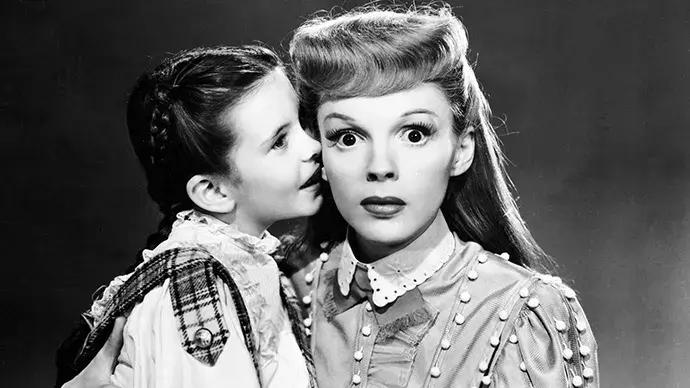
Esther Smith sings "Have Yourself a Merry Little Christmas" to her little sister Tootie, who's devastated about the family's impending move to New York. The original lyrics were even darker - "It may be your last / Next year we may all be living in the past."
Judy Garland performs it like a lament. This isn't celebration. It's consolation for loss that hasn't happened yet.
Then Tootie runs outside and destroys the snowmen the family built together. She can't take them to New York, so she smashes them in the yard whilst sobbing. It's one of the most visceral expressions of grief in a 1940s musical.
The scene works because director Vincente Minnelli doesn't soften it. Change is coming. Loss is real. The only comfort is that they're going through it together.
The Snowman (1982)
The wordless British animation ends with the boy waking on Christmas morning, finding the scarf and coal buttons in his pocket. He rushes outside. The snowman has melted. Just a puddle and a hat.
No resurrection. No magical return. Just the inevitable consequence of warmth meeting ice.
Raymond Briggs' story teaches children that beautiful things end. The night of flying and wonder happened, but it's over now. The memory remains. That has to be enough.
For adults watching, it's a meditation on mortality wrapped in a children's Christmas special. Nothing lasts. Not snowmen, not childhood, not the people we love. The magic is that they existed at all.
Frosty the Snowman (1969)
Frosty knows he's melting. When the children lock him in the greenhouse with Santa Claus, trying to save him, he's already accepted his fate. "I'll be back again someday!" he promises before disappearing.
It's a sacrifice play disguised as holiday whimsy. Frosty chooses to stay with the children even though it means his end. The resurrection at the end (Santa brings him back) almost feels like a cheat, a last-minute save from the darkness the story was willing to explore.
Children accept this kind of loss more readily than adults. We're the ones who need the happy ending. They understand that Frosty was magic precisely because he was temporary.
Love Actually (2003)
Karen, played by Emma Thompson, opens her Christmas present expecting the necklace her husband showed her earlier. Instead, it's a Joni Mitchell CD. The necklace went to someone else.
She excuses herself, goes to the bedroom, and has a private breakdown whilst "Both Sides Now" plays. Then she composes herself and returns to the family Christmas pageant because that's what you do. You hold it together for the children.
Thompson acts the scene with her back mostly to the camera. We watch her shoulders shake. We know exactly what's happening without seeing her face. It's a masterclass in showing heartbreak through restraint.
Richard Curtis fills Love Actually with warm, fuzzy romance. This scene is the exception - grown-up pain in the middle of festive cheer. It lands because it's honest about how Christmas can magnify existing wounds.
Edward Scissorhands (1990)
After being blamed for crimes he didn't commit, after trying so hard to fit into suburban normality, Edward is chased back to his castle by an angry mob. He returns to his isolation, leaving behind the only people - particularly Kim - who showed him compassion.
Tim Burton frames it as a Christmas story because Christmas is about belonging, and Edward doesn't. The neighbourhood's initial fascination with him - treating him like a novelty, a party trick - curdles into fear and rejection when things go wrong.
The snow Edward creates by sculpting ice, the snow that falls on Kim decades later, is beautiful and sad. He's still up there, alone, making beauty that the town below enjoys without thinking about its source.
It's a Christmas film about permanent exile. Not everyone gets to come in from the cold.
Messy Family Realism
When perfection isn't the goal
These are the scenes for anyone who's ever wanted to throttle their relatives whilst simultaneously loving them. Dysfunction as comfort food.
National Lampoon's Christmas Vacation (1989)
Clark Griswold has finally snapped. No Christmas bonus means no swimming pool. The years of trying to create the perfect family Christmas have led to this moment - standing in his bathrobe in the front yard, ranting to his bewildered family.
"We're gonna have the hap-hap-happiest Christmas since Bing Crosby tap-danced with Danny fucking Kaye. And when Santa squeezes his fat white ass down that chimney tonight, he's gonna find the jolliest bunch of arseholes this side of the nuthouse!"
Chevy Chase delivers the tirade with manic desperation. Every father who's ever tried too hard, spent too much, wanted too badly for Christmas to be perfect, sees himself in Clark's breakdown.
Earlier, Clark sits alone in the attic, trapped after the stairs get put away. He finds old home movies labelled "Christmas '59" and watches them with tears in his eyes. He's trying to recreate something that only existed in his memory, and it's killing him.
Then there's Cousin Eddie, the physical manifestation of all Clark's anxieties. The RV parked in the driveway, proudly announcing "Shitter was full!" The kidnapping of Clark's boss. The general havoc of having family you didn't choose and can't escape.
The dry turkey dinner - Clark's mum dunking pieces in her water, Ellen pretending to eat, everyone choking it down - captures holiday obligation perfectly. We smile through discomfort because that's what families do.
But the 25,000 Christmas lights finally working, the whole family watching them sparkle, reminds us why we bother. These messy, complicated people are his messy, complicated people.
The Family Stone (2005)
Meredith Morton, uptight and anxious, meets her boyfriend's warm, chaotic family for Christmas. Nothing goes right. She offends them with every word. They mock her relentlessly. The dinner table becomes a battlefield of passive-aggressive comments and actual aggressive comments.
Then the family's matriarch reveals she's terminally ill, and suddenly everyone's cruelty to Meredith looks like displaced grief. They're not really angry at her. They're angry that Christmas is changing, that their mother is dying, that nothing will be the same.
The film doesn't resolve this with easy sentiment. Some relationships repair; others don't. But it's honest about how stress makes families vicious, how we hurt the outsiders because we can't hurt each other.
Home Alone (1990)
Before Kevin becomes the hero of his own adventure, we see him as the youngest, most overlooked, most picked-on member of the McCallister clan. His siblings are cruel. His parents are distracted. His uncle makes fun of him. The cousin wets the bed, and somehow Kevin gets blamed.
The opening chaos - twenty people fighting over pizza, packing for Paris, nobody listening to anyone else - feels like real family dysfunction. John Hughes understood that the fantasy of being left alone only works if we first establish how suffocating family can be.
Kevin's wish that his family would disappear is the kind of thought every kid has had. The film's genius is taking that wish seriously whilst also showing its consequences.
Connection & Reunion
The moments that make it all worthwhile
After all the chaos, the dysfunction, the disappointment, these scenes deliver what Christmas promises: human connection that matters.
Home Alone (1990) - Part Two
Kevin watches through the church window as Old Man Marley embraces his son and granddaughter. They've reconciled. The terrifying neighbour was just a lonely man estranged from his family.
It mirrors Kevin's own reunion with his mother, which comes moments later. Kate McCallister finally makes it home, having travelled through hell to reach her forgotten son. They don't need words. The hug says everything.
Columbus earns both moments by building genuine emotional stakes. Marley's reconciliation works because we saw his pain in the church scene. Kevin's reunion works because we watched him grow from brat to capable, lonely child who just wants his mum.
Home Alone 2: Lost in New York (1992)
Kevin gives the Pigeon Lady one half of a pair of turtle dove ornaments. Mr. Duncan at the toy store told him they represent friendship. "As long as each person has a turtle dove, they'll be friends forever."
The Pigeon Lady, another social outcast, starts crying. It's such a small gesture - a cheap ornament from a Christmas tree - but it represents what she's been denied. Someone seeing her humanity.
The sequel gets criticised for retreading the original's formula, but this scene shows why it works. Kevin has learned that connection matters more than stuff. He's using what he has to offer love to someone who needs it.
Love Actually (2003)
The Heathrow Airport arrivals terminal becomes a montage of reunions set to The Beach Boys' "God Only Knows." Parents hugging children. Lovers embracing. Friends meeting friends.
Curtis uses real footage of actual arrivals mixed with his actors. The result feels documentary-like, less staged than the rest of the film. He's making the point explicitly: Christmas is about showing up for people, being present.
It's manipulative as hell. It works anyway.
It's a Wonderful Life (1946) - Reprise
The community gathering in George Bailey's living room deserves its own entry separate from George's redemption. Watch the faces of the people who've come to save him. The man who runs the bar. The taxi driver. The pharmacist whose son George saved decades ago.
They're not rich. They're pooling what they have because George did the same for them. Capra makes Christmastime about reciprocal aid, about communities that function, about people remembering who helped them.
"Remember, no man is a failure who has friends," reads Clarence's inscription. It's a direct rebuke to capitalism's measure of success. George didn't build an empire. He built relationships. Those relationships saved his life.
Rudolph the Red-Nosed Reindeer (1964)
Rudolph returns to save Christmas, using his glowing red nose to guide Santa's sleigh through the storm. The entire North Pole, which mocked and excluded him, now needs him.
But the better moment comes when Hermey the Elf, who wanted to be a dentist instead of making toys, finally gets acceptance. Santa tells him he's needed. His dream isn't shameful. He can be who he wants to be.
Rankin/Bass understood that children needed to see misfits triumph. The island of misfit toys gets emptied. The weird elf gets validated. The deformed reindeer becomes the hero. It's fantasy, but it's the fantasy that matters.
Dark Comedy & Subversion
For the cynics and contrarians
Sometimes the best way to survive Christmas is to laugh at it. These scenes give permission to find the holiday absurd, crass, or darkly funny.
Bad Santa (2003)
Willie T. Soke, drunk and profane in a mall Santa suit, meets little Thurman Merman, who stares at him with dead eyes and asks for a stuffed elephant.
"I said a pink elephant."
"I heard you the first time. I'm just trying to figure out why the fuck you want an elephant."
The scene works because Billy Bob Thornton commits completely to being the worst possible Santa whilst Brett Kelly's Thurman refuses to acknowledge that anything is wrong. The kid's innocence against Willie's debasement creates comedy from pure dissonance.
Later scenes pile on the dysfunction - kids crying on Santa's lap, one kid vomiting on Willie, another asking for his father to return from prison. Terry Zwigoff's film treats Christmas as a gauntlet to survive rather than a celebration to enjoy.
It's a comedy for everyone who's ever wanted to tell mall Santas the truth: this is terrible for everyone involved.
Something a bit different...
 Richard Wells
Gremlins (1984)
Kate Peltzer tells Billy why she hates Christmas. Her father tried to surprise the family by dressing up as Santa and climbing down the chimney. He got stuck. He died there. They didn't find him until days later, wondering where he'd gone.
The monologue arrives in the middle of a horror-comedy about monsters destroying a small town. Phoebe Cates delivers it with such straight-faced sincerity that you don't know whether to laugh or cringe.
Joe Dante included the scene to disrupt the film's tonal consistency. Just when you're comfortable with the chaos, Kate reminds you that Christmas contains genuine trauma for some people. The holiday isn't universally wonderful. For her, it's the anniversary of losing her father in the stupidest, saddest way possible.
Die Hard (1988)
John McClane, bloodied and exhausted, finally meets Sergeant Al Powell face-to-face after spending the entire film talking to him via radio. They embrace. Powell saved McClane from the last henchman. They laugh.
"You still on the clock?" McClane asks.
The scene works because John McTiernan plays the entire film as genuine action thriller that happens to be set at Christmas. The holiday isn't the point. It's flavouring. But that flavouring matters - the empty office building, the Christmas party that becomes a hostage situation, the festive music playing whilst McClane crawls through air ducts.
The film gives permission to find Christmas boring enough that breaking it with terrorism feels like a relief. And yes, it's a Christmas film. We're not having that argument again.
Scrooged (1988) - Part Two
Carol Kane's Ghost of Christmas Present beats the living hell out of Frank Cross. She hits him with a toaster. She smashes him with chairs. Every time he refuses to listen, she escalates the violence.
Bill Murray sells it with increasingly desperate reactions. The ghost isn't whimsical. She's brutal. The contrast between her fairy godmother appearance and her violent teaching methods creates comedy from pure chaos.
Donner uses the scene to literalise what Christmas does to resistant people. You will feel joy. You will appreciate your life. Even if we have to beat it into you.
Recommended For You...
 Richard Wells
Pure Nostalgia & Comfort
The weighted blanket films
Sometimes you don't need complexity. You need the familiar, the cosy, the safe. These scenes deliver Christmas exactly as you remember it (or wish you did).
A Christmas Story (1983)
Ralphie Parker wakes up on Christmas morning, looks out the window at fresh snow on the trees, and breathes "Wow..."
That single word, delivered by Peter Billingsley with pure wonder, captures childhood Christmas better than any speech could. The adult narrator has been dryly commenting on everything, but here he lets the moment speak for itself.
Then Ralphie finally gets his Red Ryder BB gun. His parents haven't forgotten. They saved the best present for last. He rushes outside to shoot it and immediately nearly blinds himself, exactly as everyone predicted.
Bob Clark's film is episodic - the leg lamp ("Fra-gee-lay! Must be Italian!"), the tongue stuck to the frozen flagpole, the Chinese restaurant dinner. But it coheres around Ralphie's single-minded obsession and the gentle absurdity of 1940s family life.
It's nostalgia for a time most viewers never experienced, filtered through Jean Shepherd's sardonic narration. The film acknowledges that memory exaggerates whilst still celebrating what it preserves.
Muppet Christmas Carol (1992)
Kermit the Frog as Bob Cratchit presides over his family's meagre Christmas dinner. They have one tiny bird. They're barely scraping by. But the Cratchit family radiates warmth.
Miss Piggy plays Emily Cratchit with surprising pathos. Tiny Tim, a small frog on crutches, delivers "God bless us, everyone" without irony. Michael Caine as Scrooge plays it completely straight, treating his Muppet co-stars with theatrical respect.
Later, when Beaker gives Scrooge his scarf as the ghost of Christmas Present departs, it's a moment of pure Muppet generosity. No joke. No punchline. Just kindness.
Brian Henson directs Dickens faithfully whilst letting the Muppets be themselves. The tonal balance - genuine emotion alongside Muppet chaos - creates something that works for both children and adults without condescending to either.
The line "Life is made up of meetings and partings; that is the way of it" hits differently as an adult. Kermit isn't just comforting his children about Tiny Tim's potential death. He's articulating the truth we all learn eventually.
Mickey's Christmas Carol (1983)
Mickey Mouse as Bob Cratchit, Donald Duck as Fred, and Scrooge McDuck literally playing Ebenezer Scrooge - Disney cast this adaptation perfectly by using characters already embedded in cultural consciousness.
Tiny Tim's "God bless us, everyone" works here because it's Morty, and the innocence feels earned rather than calculated. When the Ghost of Christmas Future (played by Pete, naturally) shows Scrooge his grave, the animation becomes genuinely frightening.
The 26-minute runtime means no padding. Every scene serves the story. It's Dickens condensed to pure essence, decorated with Disney warmth.
For children of the 1980s, this was often their first encounter with A Christmas Carol. The characters provided entry into the story's themes. You understood Scrooge's redemption because you'd seen Scrooge McDuck be greedy in other cartoons.
Elf (2003)
Buddy, raised as an elf at the North Pole, discovers New York City with childlike wonder. He spins through the revolving doors. He gets excited about escalators. He treats everything as magical because, to him, it is.
Will Ferrell commits to playing Buddy without irony. He's not winking at the audience. He genuinely believes in Santa, in Christmas spirit, in the goodness of people. In 2003, that kind of earnestness felt revolutionary.
When Santa's sleigh crashes in Central Park due to a lack of Christmas spirit, Michael (Buddy's half-brother) reads Santa's list aloud to the news cameras, proving Santa is real. The entire crowd, led by Jovie, begins singing "Santa Claus is Coming to Town," generating enough belief to power the sleigh. It crystallises the film's thesis: belief makes things real. Christmas works when people participate without cynicism.
The "Santa!" department store scene, where Buddy enthusiastically greets the fake Santa before realising the deception, showcases Jon Favreau's tonal control. It's funny because Buddy's genuine, and the fake Santa is affronted by being called out.
The film succeeds by playing sincerity completely straight while surrounding it with comedy. Buddy never learns to be cynical. That's his superpower.
The Santa Clause (1994)
Scott Calvin reluctantly becomes Santa Claus after the previous Santa falls off his roof. The transformation happens slowly - he gains weight, grows a beard that won't shave off, develops an inexplicable love of cookies and milk.
Tim Allen plays Scott's resistance as genuinely as possible. This isn't a dream come true. It's an identity crisis. His corporate life is evaporating, replaced by magical obligation he never requested.
But the hot chocolate scene at Denny's, where the waitress instinctively knows what he wants, signals his acceptance. The North Pole becomes home. Being Santa isn't punishment. It's purpose.
The film captures a specifically 1990s fantasy: what if your boring, unfulfilling job got replaced by magic? What if the childhood wonder you lost came back and demanded your participation?
White Christmas (1954)
Bing Crosby and Rosemary Clooney duet "Count Your Blessings Instead of Sheep." It's not the title song, but it's the emotional heart - two people acknowledging that happiness is choice, that gratitude requires practice.
Michael Curtiz directs this like a love letter to post-war America. The soldiers putting on a show for their old general captures both nostalgia for wartime bonds and relief that those days are over. We miss the clarity of purpose, not the war itself.
The sister act, the Vermont inn, the elaborate musical numbers - it's all spectacle in service of warmth. The film wants you to feel safe, to believe in happy endings, to trust that goodness prevails.
For modern viewers, it's almost aggressively wholesome. That's precisely why it endures. Sometimes you need to believe the world can be that kind.
The Scene That Meets You Where You Are
I've watched Home Alone every Christmas since 1990. But the scene that gets me changes.
As a kid, I loved Kevin's victory over the burglars. The tarantula, the paint cans, the blowtorch to the head - pure wish fulfilment for any child who felt powerless.
As a teenager, I connected with Kevin's initial joy at being alone. The jumping on the bed, the junk food, the forbidden films. Freedom looked like that.
In my twenties, living far from family, I finally understood the scene where Kevin sits in the empty house and says "I made my family disappear." The weight of that realisation - the loneliness masked as independence.
Now, with kids of my own, I can't watch Kate McCallister's desperate journey home without tearing up. The mother who forgot her child, who moved heaven and earth to correct that mistake. The hug when she finally arrives.
Same film. Different scenes. That's how this works.
Christmas contains multitudes. So do we. The scenes that resonate shift as our relationship with the holiday evolves. Maybe you need It's a Wonderful Life's redemption this year. Maybe you need Gremlins' dark comedy. Maybe you need Meet Me in St. Louis to give voice to loss you can't articulate otherwise.
There's no wrong answer. No mandatory Christmas feeling. Just scenes waiting to meet you wherever you are.
The magic isn't in the films themselves. It's in recognising your reflection in their glow - seeing your Christmas, your pain, your joy, your complicated relationship with this impossible holiday mirrored back through decades of cinema.
So light the fire, make the cocoa, and find your scene.
The one that gives you that feeling - whatever that feeling is for you, right now, this Christmas.
That's the moment that matters.