Picture this: you're the most acclaimed actress of 1994. Critics compare you to Barbara Stanwyck. You win every major award except the Oscar—and only miss that because of a technicality. You star opposite Will Smith and Tommy Lee Jones in a film that grosses $589 million worldwide.
Five years later, you've vanished.
Not gradually. Not with a farewell tour or graceful retirement announcement.
Just gone.
That's Linda Fiorentino.
Her last substantial film role came in 2002. Last screen appearance of any kind: a direct-to-video comedy in 2009. Last public sighting: a gala in 2010. Sixteen years of near-total silence.
For an actress who once commanded the screen with a voice described as "smoky bourbon over gravel" and an intensity that made grown men nervous, the vacuum is unsettling.
What happened? The official story—"difficult to work with"—is Hollywood code so vague it could mean anything. The unofficial stories are darker: FBI corruption, industry blacklisting, Harvey Weinstein's revenge, and a scandal involving classified government files.
Except it's all documented.
Court records. FBI testimony. Industry admissions.
This is the story of how one of the most magnetic screen presences of the 1990s got erased.
The Breakthrough Nobody Saw Coming
Clorinda "Linda" Fiorentino landed in Hollywood through sheer bloody-minded persistence.
Born 9th March 1958 in Philadelphia to Italian-American parents, she grew up one of seven or eight children (accounts vary) in a working-class household. The family moved to Turnersville, New Jersey. She excelled at basketball and cheerleading at Washington Township High School, graduated 1976, then headed to Rosemont College.
Her own words about falling into theatre: "Everyone there was really weird."
She fit right in.
Graduated 1980 with a Political Science degree, then did what every aspiring actor does—moved to New York, studied at Circle in the Square Theater School, worked as a bartender. The Kamikaze nightclub, specifically.
Bruce Willis was her colleague behind the bar.
Her screen debut came in 1985 with Vision Quest, a wrestling film where she played the older woman opposite Matthew Modine. Roger Ebert noticed immediately:
"What comes across is a woman who is enigmatic without being egotistical, detached without being cold, self-reliant without being suspicious."
She beat out Rebecca De Mornay, Rosanna Arquette, and Demi Moore for the role.
That same year: Gotcha! with Anthony Edwards, then Martin Scorsese's After Hours. Three films. Three completely different characters. All in one year.
But it was 1994 that should have changed everything.
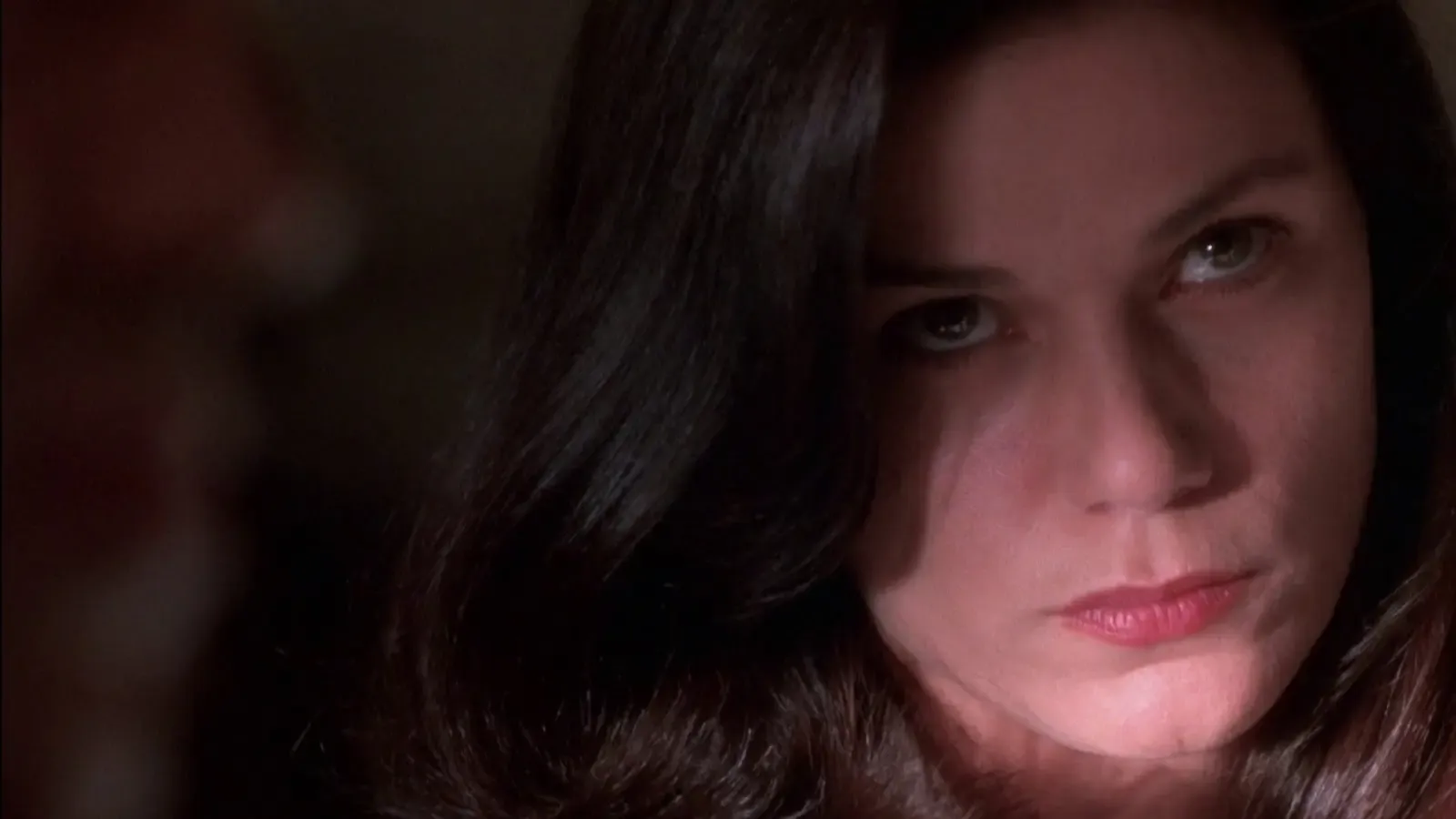
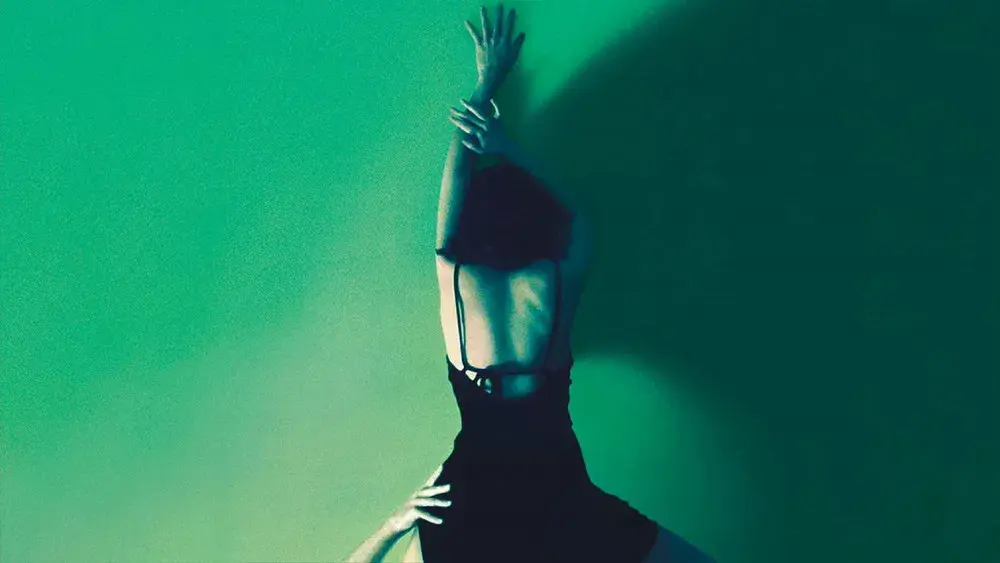
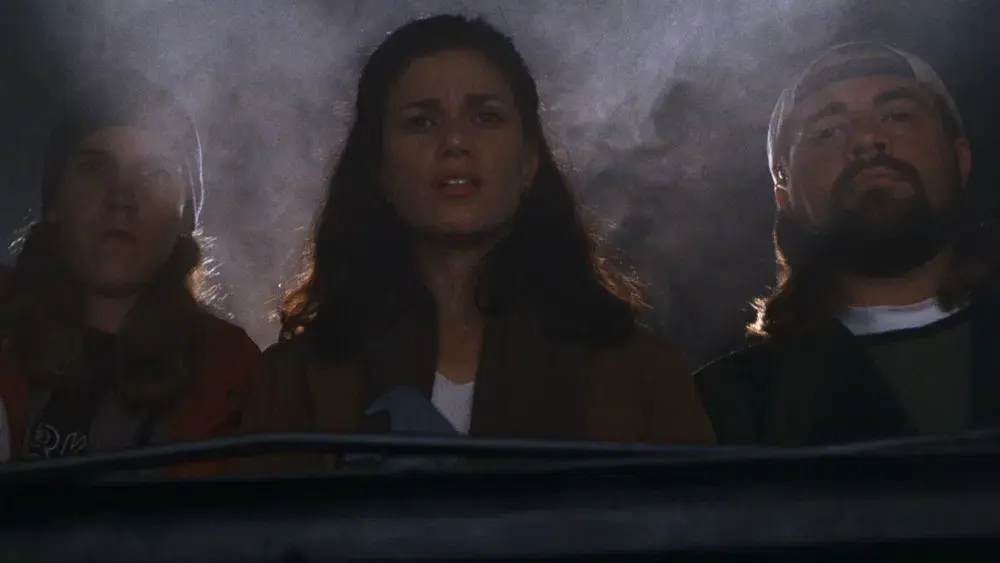
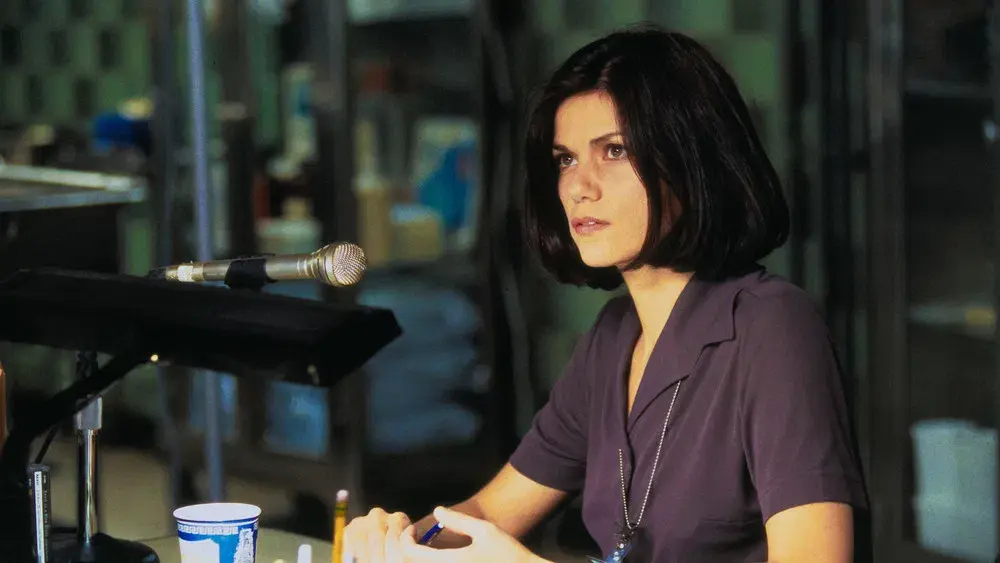
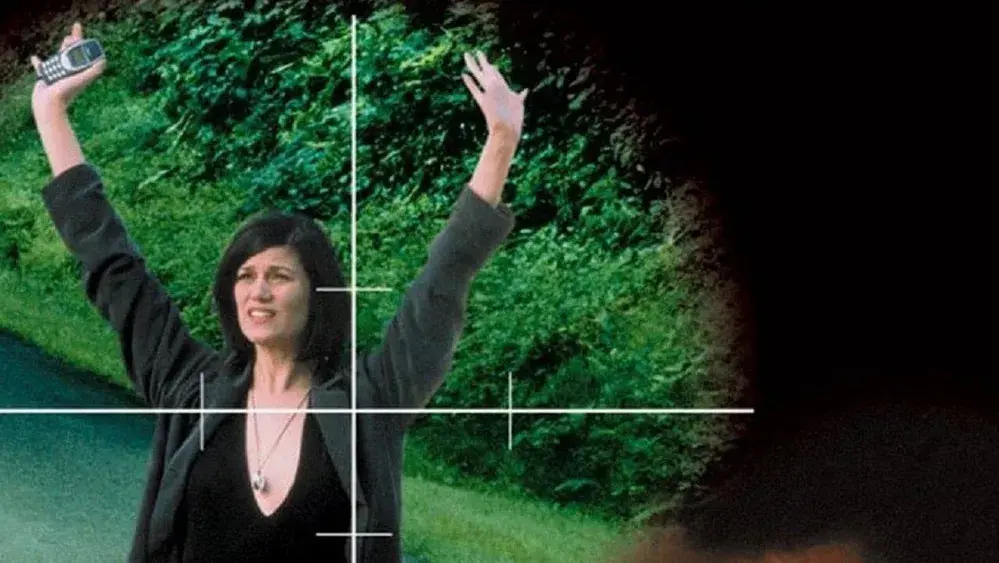
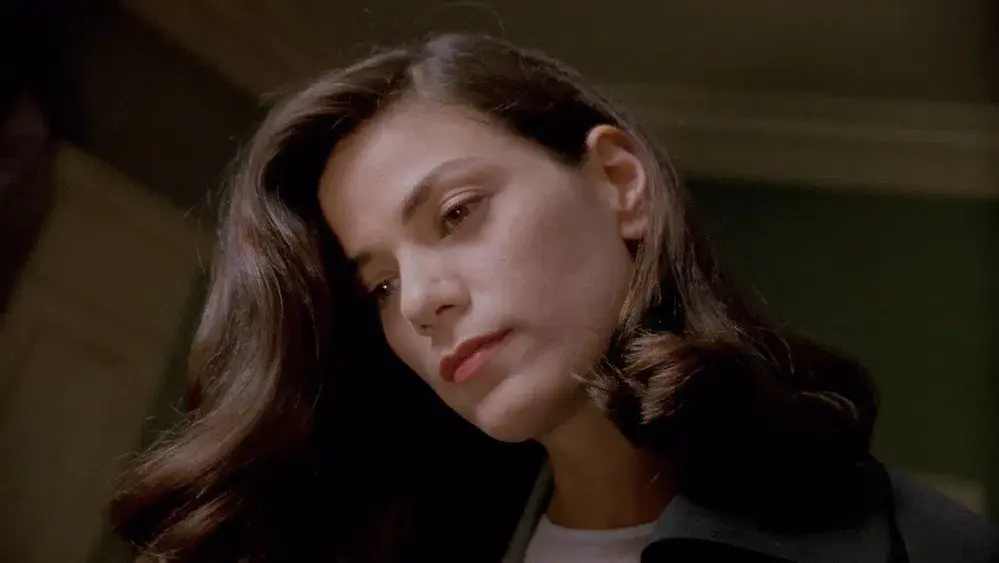
Linda Fiorentino Movie Still Gallery
The Last Seduction and the Oscar That Never Was
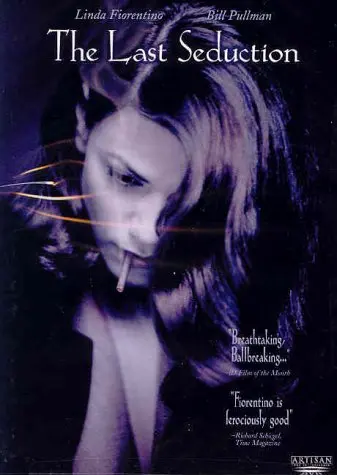
The Last Seduction is one of those films that arrives fully formed, like it materialised from the noir gods specifically to prove a point.
Fiorentino plays Bridget Gregory, a woman so ruthlessly intelligent she makes everyone around her look like they're moving in slow motion. After her husband—a drug-dealing loser played by Bill Pullman—scores $700,000 in a pharmaceutical cocaine deal, Bridget steals the lot and disappears to a small town where she reinvents herself, seduces a local man (Peter Berg), and manipulates him into murder.
She doesn't apologise. She doesn't get her comeuppance.
She wins.
Director John Dahl told The New York Times that most actresses thought the character was too despicable to play. "But Linda saw the potential in the part and recognised it as something that she could have a lot of fun with."
Fiorentino improvised the film's most notorious scene—sex against a chain-link fence behind a bar—and delivered a performance so magnetic that critics immediately started talking Oscar.
She won the New York Film Critics Circle Award for Best Actress. The London Film Critics' Circle Award for Actress of the Year. The Independent Spirit Award for Best Female Lead. BAFTA nominated her. Roger Ebert openly championed her.
Then came the technicality that destroyed everything.
The Last Seduction had premiered on HBO—once, at midnight, before its theatrical run—because the producers couldn't initially secure distribution. That single broadcast made Fiorentino ineligible for an Academy Award nomination.
The producers tried to sue. Critics rallied. Ebert publicly condemned the decision.
Didn't matter.
The 1995 Best Actress lineup: Jodie Foster (Nell), Jessica Lange (Blue Sky), Miranda Richardson (Tom & Viv), Winona Ryder (Little Women), Susan Sarandon (The Client). Lange won for a film delayed years due to studio bankruptcy.
Fiorentino was better than all of them.
The Oscar snub wasn't just disappointing—it was potentially career-altering. An Academy Award nomination creates momentum, signals legitimacy. Fiorentino delivered one of the decade's most acclaimed performances and got nothing.
Still, she had options. Her next move was obvious: leverage the acclaim into bigger roles.
From Poker Games to Blockbusters
William Friedkin's Jade (1995) came first—an erotic thriller written by Joe Eszterhas that died at the box office. Co-star Michael Biehn later admitted: "I don't think anybody had any idea what they were doing. It was a Joe Eszterhas script. To me, none of it ever really made any sense."
But Fiorentino bounced back.
She landed the female lead in Barry Sonnenfeld's Men in Black (1997). How she got the role has become Hollywood legend: she won it in a poker game from Sonnenfeld himself. Along with the part, she walked away with roughly $1,200.
As Dr. Laurel Weaver—later Agent L—she brought her signature dry intelligence to what could have been a thankless role. The film grossed $589 million worldwide.
Then came Kevin Smith's Dogma (1999), where she played Bethany Sloane, an abortion clinic worker who discovers she's the last living blood relative of Jesus Christ and must prevent two fallen angels from accidentally ending existence.
Exactly the kind of challenging, weird material Fiorentino gravitated towards.
Except Harvey Weinstein didn't want her in the film.
Fiorentino herself later admitted she "fought furiously" for the role against his objections. Whether his opposition was personal or professional was never clarified. Given what we now know about Weinstein's behaviour, speculation is inevitable.
She got the part anyway.
But the experience on set became ammunition for something far more damaging.
Read Next
From the Vault
The "Difficult" Label
Kevin Smith's public evisceration of Linda Fiorentino in 2000 was comprehensive.
Speaking to TV Guide: "Linda created crisis and trauma and anguish. She created drama whilst we were making a comedy. She was ticked off that there were other people in the movie who were more famous than she was."
He claimed she refused to speak to him on certain days. That she "went nuts" over the film's poster—which had spliced her head onto another woman's body with amplified cleavage—and subsequently refused to do press. On the DVD commentary, Smith suggested Janeane Garofalo should have played the lead instead.
"It's not like we were hinging on all that Fiorentino press—I fought to cast the woman in the movie."
In Hollywood, "difficult" is career poison—especially for women. Once the label sticks, it metastasises.
But there are problems with Smith's narrative.
Director John Dahl cast Fiorentino twice—in The Last Seduction and Unforgettable. Anthony Edwards and Chazz Palminteri both hired her for their personal projects. Barry Sonnenfeld spoke warmly of her.
If she was genuinely impossible to work with, why did multiple directors come back for more?
And then there's Tommy Lee Jones. He allegedly refused to return for Men in Black II (2002) if Fiorentino was involved. Producer Laurie MacDonald gave a diplomatic explanation about the story not having room for her character.
Rumours persisted that Jones had made her absence a condition of his return.
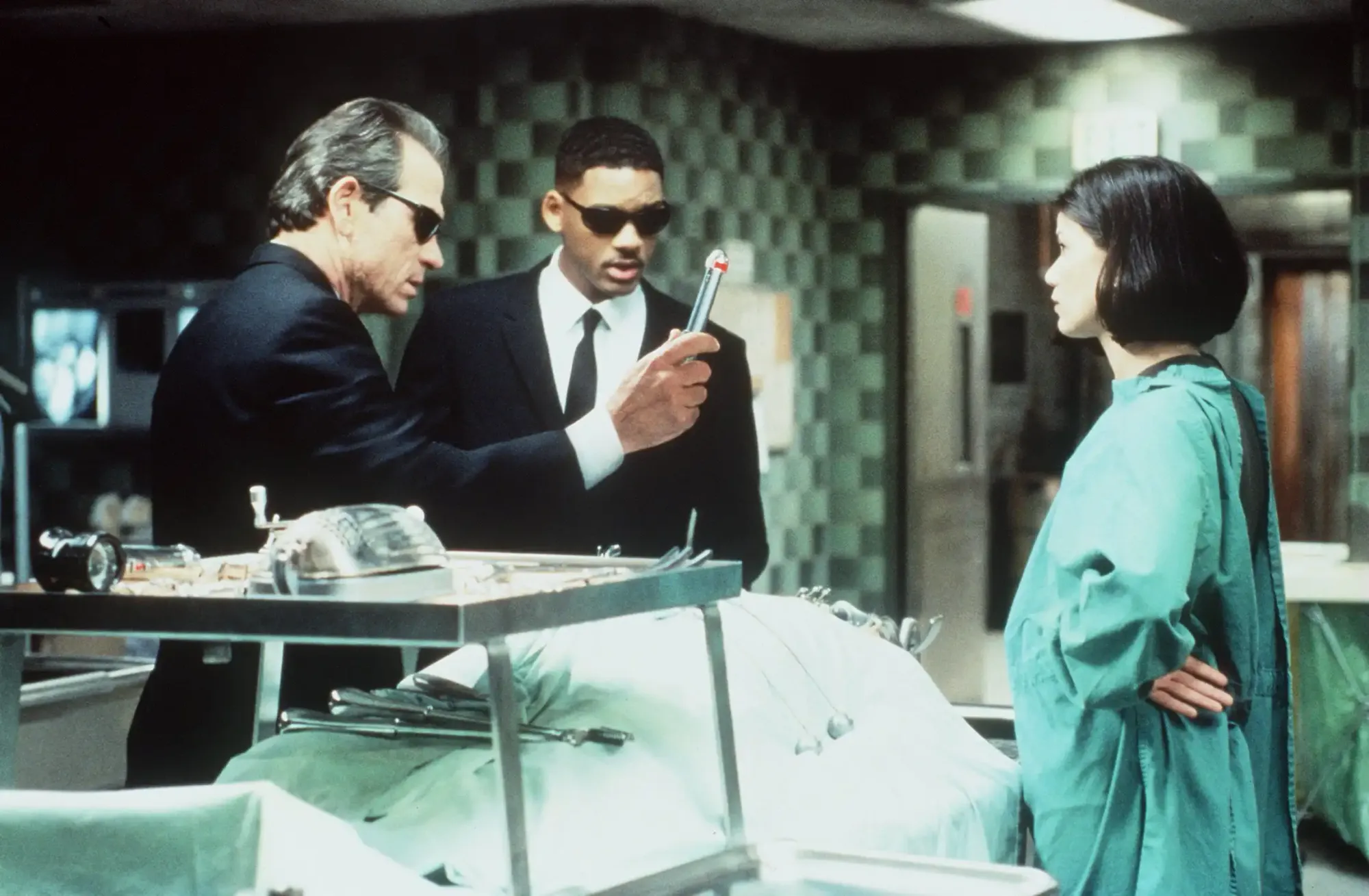
Two A-list men—Smith and Jones—publicly or privately slagging off the same actress. Both claiming she was the problem. Neither provided specific incidents. No documented blow-ups. No crew members going on record.
Just vague accusations of being "difficult."
Which brings us to 2018.
After Kevin Smith's near-fatal heart attack, Fiorentino sent him an email. First contact in years. Smith later admitted he was "thankful to hear from her" and used the opportunity to apologise: "I'm so sorry that I ever said that thing years ago... If somebody had said, 'Oh, the movie would have been better if Ben Affleck directed it' that would have hurt my feelings."
Too little, too late.
The reputation damage had been done nearly two decades earlier.
But "difficult" wasn't the only theory circulating about Fiorentino's disappearance.
Behind the vanishing acts: Explore our full database of archival records and investigative profiles.
The FBI Agent, The Private Eye, and The Actress
This is where the story gets genuinely strange.
In the mid-2000s, whilst Hollywood private investigator Anthony Pellicano was being prosecuted for wiretapping some of the industry's biggest names—Sylvester Stallone, Chris Rock, others—Linda Fiorentino became romantically involved with FBI Special Agent Mark Rossini.
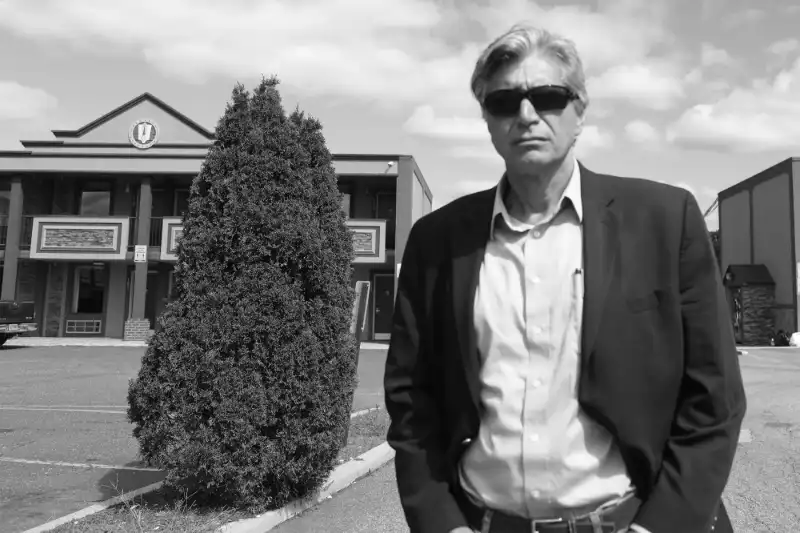
Rossini was dapper, charismatic, a 17-year veteran who'd worked counterterrorism in New York and Washington. Fiorentino told him she was researching a screenplay about Pellicano's life.
They started dating in 2006.
What happened next is documented in federal court filings.
Between January and July 2007, Rossini illegally accessed the FBI's Automated Case Support System more than 40 times, searching for confidential files related to Pellicano's case. He pulled information on Hollywood power players: former superagent Michael Ovitz, entertainment lawyer Bert Fields, William Morris agency president James Wiatt.
Most damningly, he downloaded a confidential FBI informant report about Pellicano and gave it to Fiorentino.
She passed it to Pellicano's defence attorneys.
The report raised questions about the credibility of a key prosecution witness. Pellicano's lawyers tried to use it to argue government misconduct. It didn't work. Pellicano was convicted in 2008 on 78 charges and sentenced to 15 years.
But the leaked document triggered a federal investigation.
When confronted, Rossini lied to his supervisors. Lied to Department of Justice investigators. Claimed he never accessed unauthorised information, that news coverage linking him to the Pellicano case was "completely false."
Then the evidence piled up.
December 2008: Rossini resigned from the FBI. He pleaded guilty to five misdemeanour counts of unauthorised computer access. May 2009, standing before U.S. Magistrate Judge John Facciola: "I am so profoundly and deeply ashamed and remorseful."
He got one year probation and a $5,000 fine.
Linda Fiorentino was never charged. Prosecutors described her as "Person X"—someone Rossini had "a close personal relationship" with who had "a previous relationship" with Pellicano. Never called to testify. Never faced charges. Never publicly commented.
Pellicano's attorney described their relationship as "pen pals." Others suggested it was calculating—that Fiorentino had deliberately cultivated Rossini to help Pellicano's defence.
The timeline is damning.
Fiorentino's last theatrical film role: Liberty Stands Still (2002)—the same year the Pellicano investigation went public. By the time Rossini pleaded guilty in 2008, she'd essentially vanished. Her final screen appearance—Once More with Feeling (2009)—came the same year Rossini was sentenced.
An actress already labelled "difficult" now appeared connected to an FBI corruption scandal involving one of Hollywood's most notorious fixers.
Whether fair or not, the association was toxic.
Harvey Weinstein's Shadow
For years, industry insiders whispered that Weinstein had blacklisted Fiorentino after she refused his sexual advances.
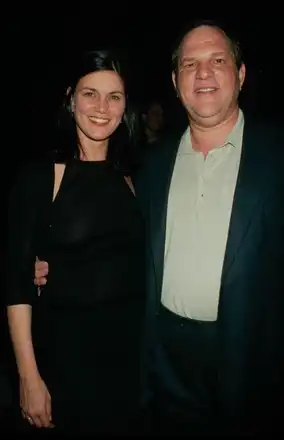
What we know for certain: Weinstein didn't want Fiorentino in Dogma. She fought for the role anyway. Miramax distributed the film. Weinstein controlled Miramax.
After Dogma, Fiorentino's career opportunities dried up fast.
Where the Money Is (2000) with Paul Newman. What Planet Are You From? (2000) with Garry Shandling. The straight-to-video Liberty Stands Still (2002). Nothing with the weight or visibility of her late-1990s work.
In 2007, Variety reported she'd optioned rights to a screenplay about Russian poet Anna Akhmatova with plans to produce, possibly star, potentially direct.
The project never happened.
Whether Weinstein was directly responsible is impossible to prove without testimony from Fiorentino herself, and she's never spoken publicly about it. But the pattern fits: a strong-willed actress who refused to play Hollywood politics, clashed with one of the industry's most vindictive power brokers, and subsequently found doors closing.
It's worth noting that "difficult to work with" was Weinstein's favourite weapon. Ashley Judd, Mira Sorvino, Rosanna Arquette—all were branded difficult after rejecting him. All saw their careers stall.
Fiorentino never joined the public testimonies. Never went on record.
But the silence itself is telling.
The Silent Exit
Fiorentino's final professional appearances barely registered.
Liberty Stands Still (2002): direct-to-video thriller with Wesley Snipes. Once More with Feeling (2009): low-budget comedy with Chazz Palminteri that went straight to home video.
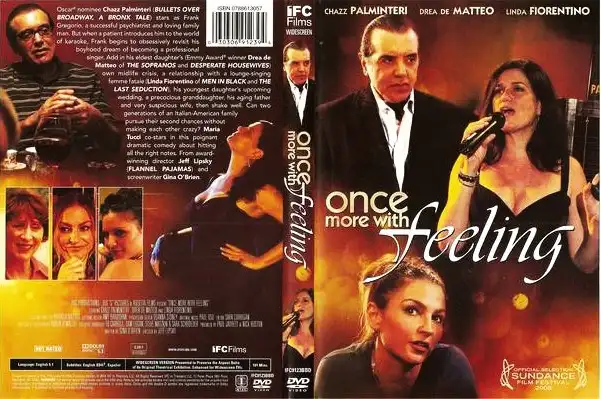
No fanfare. No press tours. No explanation.
By 2010, she'd stopped entirely. Last confirmed public appearance: a gala that year.
Then: nothing.
No social media presence. No interviews. No tell-all memoir. No strategic comeback attempt.
Just silence.
Casting directors reportedly described her as "N.I.B."—Not In Business. Whether that was her choice or the industry's remains unclear.
The tragedy is what we lost.
Fiorentino wasn't just another pretty face. She brought intelligence, danger, and complexity to roles that could have been cardboard cutouts. She made you lean forward. Made you pay attention. Made you wonder what she was thinking behind those eyes.
Hollywood is littered with talented actresses whose careers got cut short by egos, politics, and power structures that punish women for having opinions.
Linda Fiorentino might be one of the most egregious examples.
Where Is Linda Fiorentino Today?
In January 2026, the Daily Mail revealed what fifteen years of silence had hidden: Linda Fiorentino filed for Chapter 7 bankruptcy in California in 2023.
The court documents painted a grim picture. $300,000 in debt. Just $10,000 in assets. She owed $93,000 in taxes. $57,000 to American Express. Twenty different store credit cards, all carrying balances. Monthly income: $5,300.
The actress who once commanded million-dollar salaries was drowning in retail debt.
The Daily Mail visited three properties linked to Fiorentino through public records. She wasn't living at any of them. Her sister Ellen confirmed contact but refused to provide details. A PO box in Brooklyn suggested East Coast residence, but nobody had actually seen her there.
Most tellingly: when Fiorentino's mother Clorinda died in March 2024, Linda wasn't mentioned in the obituary. Ellen and her other siblings were listed. Several grandchildren. But not Linda.
Either she requested the omission, or the family had lost contact entirely. (speculation)
She's 67 now (born March 1958). No photographs since 2010. No social media presence. No exhibitions of her photography, despite studying at the International Center of Photography in New York since 1987.
Just bankruptcy filings and silence.
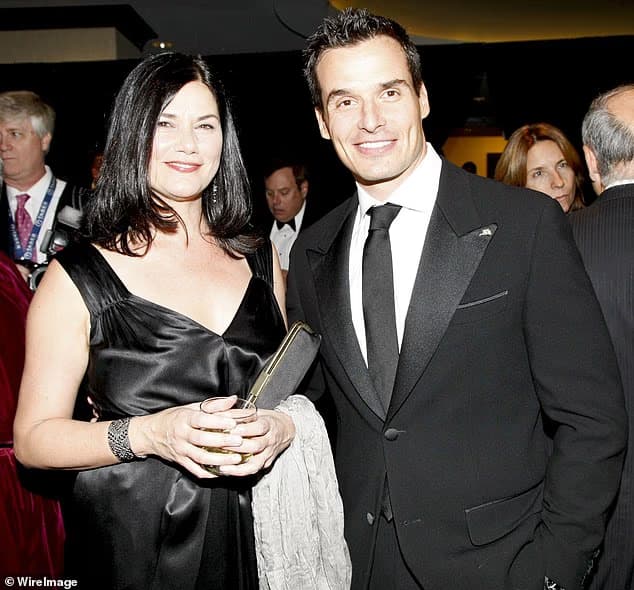
The mystery isn't just about disappearance anymore. It's about survival. What does a former Hollywood actress do when the roles stop coming, the FBI scandal destroys what's left of her reputation, and the money runs out?
In a 2000 interview, she said: "Marriage is a financial contract; I have enough contracts already."
Twenty-three years later, she'd file for bankruptcy with twenty store cards maxed out.
The film industry isn't renowned for treating women well—especially women who refuse to play by unwritten rules about deference and gratitude. Fiorentino always seemed like someone who'd rather disappear than compromise. Her characters certainly were.
Maybe she got tired of being the smartest person in rooms full of people who couldn't see it. Maybe the industry drove her out through sexism, blacklisting, and scandal-by-association. Maybe all of those things happened simultaneously, and she decided the game wasn't worth playing.
Whatever the reason, we lost one of the most compelling screen presences of the 1990s. An actress who should have had the career trajectory of someone like Cate Blanchett or Tilda Swinton—fearless, intelligent, choosing projects based on quality rather than commercial safety.
Instead, we got The Last Seduction, Men in Black, Dogma, and then silence.
Followed by bankruptcy, debt collectors, and a family that may or may not remember to list you in obituaries.
Hollywood's loss, probably.
Hers too, definitely.
Sources
Primary Interviews & Documents:
- TV Guide (May 2000) - Kevin Smith interview: "Kevin Smith: Angry Young Man"
- The Daily Beast (9 May 2018) - Kevin Smith on Fiorentino email after heart attack: https://www.thedailybeast.com/kevin-smith-on-surviving-a-heart-attack-its-like-i-got-to-attend-my-own-wake
- The Washington Post (15 May 2009) - Mark Rossini sentencing: https://www.washingtonpost.com/wp-dyn/content/article/2009/05/14/AR2009051403547.html
- The New York Times (23 October 1994) - John Dahl on casting The Last Seduction: https://www.nytimes.com/1994/10/23/movies/film-having-some-fun-with-the-barbara-stanwyck-role.html
- Roger Ebert (15 February 1985) - Vision Quest review: https://www.rogerebert.com/reviews/vision-quest-1985
- The Beaver County Times (23 April 2000) - Fiorentino quote on marriage/contracts: https://news.google.com/newspapers?id=t5lQAAAAIBAJ&sjid=aFsDAAAAIBAJ&pg=6651
FBI/Pellicano Scandal Coverage:
- Deadline (December 2008) - FBI agent charged in Pellicano case: https://deadline.com/2008/12/fbi-agent-who-dated-hollywood-actress-now-drawn-into-pellicano-scandal-7645/
- Tickle The Wire (2009) - Rossini sentencing coverage: https://ticklethewire.com/ex-fbi-agent-mark-rossini-gets-slap-on-wrist-one-year-probation-in-case-where-he-leaked-secret-document-to-actress-linda-fiorentino/
- ABA Journal (2008) - Ex-FBI agent pleads in Pellicano case: https://www.abajournal.com/news/article/ex-fbi_agent_pleads_in_case_related_to_celebrity_wiretapping
Film Industry & Career Analysis:
- Wikipedia - Linda Fiorentino: https://en.wikipedia.org/wiki/Linda_Fiorentino
- Wikipedia - Anthony Pellicano: https://en.wikipedia.org/wiki/Anthony_Pellicano
- IMDb - Linda Fiorentino: https://www.imdb.com/name/nm0000400/
- Variety (16 July 2007) - Anna Akhmatova screenplay project: https://variety.com/2007/film/markets-festivals/fiorentino-revives-russian-poet-1117968744/
- Screen Rant (25 June 2025) - The Last Seduction Oscar disqualification: https://screenrant.com/the-last-seduction-movie-oscars-disqualified-showtime-screening/
- Collider (10 April 2025) - Kevin Smith feud and career analysis: https://collider.com/linda-fiorentino-kevin-smith-feud-dogma-career/