
Picture this: It's 1978, and Warner Brothers has just bought a film for world distribution. Not a studio picture — something made on grants, shot in six and a half weeks stretched over a year because they kept running out of money. Sixteen millimetre. Half a million dollars. The kind of film that shouldn't exist, let alone get picked up by a major studio.
Stanley Kubrick calls it 'one of the most interesting American films' he's seen in years. Compares it to the best European directors. The lead actress gets a Golden Globe nomination. The film will be preserved in the National Film Registry, get a Criterion restoration, inspire Lena Dunham and Greta Gerwig and a generation of female filmmakers.
Anita Skinner played the roommate. The one who leaves. The one whose departure breaks everything open. She got the Golden Globe nomination. Then she made one more film — a horror movie that would inspire Final Destination — and vanished so completely that nobody knows where she was born, when she was born, or where she is now.
What happens when an actress gives two perfect performances in two cult classics, earns Kubrick's praise and a Golden Globe nomination, and then disappears so thoroughly that even her birthday becomes a mystery?
The Film Stanley Kubrick Couldn't Stop Praising
Girlfriends emerged from the scrappy heart of 1970s independent cinema. Director Claudia Weill started with a 30-minute short funded by the American Film Institute. She realised she wanted more. Grants from the National Endowment for the Arts and New York State Council totalled $80,000. When that ran out, she found private investors. Principal photography stretched across a year because production kept stopping when the money did.
The result was something Hollywood didn't know how to make: a film about female friendship that treated women like actual human beings. Melanie Mayron played Susan Weinblatt, a Jewish photographer struggling in New York. Anita Skinner played Anne Munroe, her aspiring writer roommate who moves out to get married — the departure that sets the entire story in motion.
The machinery noticed.
Warner Brothers bought it for world distribution. It won the People's Choice Award at the third Toronto International Film Festival in 1978. Rotten Tomatoes would eventually log a 93% critics score. Stanley Kubrick publicly praised Girlfriends in 1980 as "one of the most interesting American films" he had seen, noting its refusal to compromise the "inner truth of the story" despite an "amateur" shooting schedule.
Scrappy Origins and the 30-Minute Seed
The film didn't start as a blockbuster attempt. It began as a seed. The first seven minutes of the feature were adapted from that initial 30-minute AFI short. It was the first American indie film primarily funded by grants from the NEA and NYSCA.
That was the blueprint.
Claudia Weill was building something that didn't rely on the studio system's permission. She was documenting the friction of the 1970s — New York City as a character, not just a backdrop. And at the centre of that friction was the relationship between Susan and Anne.
The shoot was torturous — intermittent dates, exhausted crew, private investors filling gaps whenever the grants ran dry. But it worked. The film won the Bronze Leopard at the 1978 Locarno Film Festival and the Grand Jury Prize at the Utah-US Film Festival, the precursor to Sundance.
Anne Munroe's Departure
The role of Anne Munroe wasn't the lead, but it was the catalyst. In the grammar of the film, Anne is the one who chooses convention. She moves out. She gets married. She leaves Susan behind in their shared bohemian struggle.
It is a performance defined by what is missing — the space Anne leaves behind is the vacuum that Susan must fill with her own identity. Anita Skinner delivered a performance that was magnetic without being loud. She was the anchor. When she left the apartment, she left the audience wondering why the industry hadn't already paved the way for her.
The industry wasn't watching the same film.
The role was the kind of supporting performance that defines a work without dominating it. Anne's choice forces Susan to confront her own life, her own ambition, and the terrifying reality of being a woman alone in the world. Skinner made that transition feel like a betrayal, not a natural progression.
A Golden Globe for Leaving
The industry seemed to agree that a star had arrived. On the 27th January 1979, Anita Skinner received a Golden Globe nomination for New Star of the Year — Actress. She stood amongst the nominees in a room full of veterans.

The award eventually went to Irene Miracle for Midnight Express. But the nomination itself was the evidence. It was a recognition of a debut that felt fully formed. Skinner wasn't an "ingenue" in the traditional sense; she was a woman who looked like she understood the weight of her choices.
That was the peak.
The Machinery Notices—And Then Stalls
Hollywood loves a success story until it doesn't know how to market the sequel. Girlfriends was a hit, but it was a "women's film" in an era where that was still treated as a niche. The film was ranked 9th on the National Board of Review's top 10 films of 1978. It received a BAFTA nomination for Most Promising Newcomer for Melanie Mayron.
But for Skinner, the momentum didn't translate into a slate of prestige roles. The industry was content to let her fade. Perhaps the phone stopped ringing. Perhaps she simply stopped answering.
Then came the silence.
Six Years of Silence
We don't know if Anita Skinner was auditioning between 1978 and 1984. We don't know if she was turning down scripts that tried to turn her into a caricature. The record is blank.
The machinery ground her down. This wasn't an accident. Even Claudia Weill found the industry barriers insurmountable, eventually shifting to television and theatre by the mid-1980s because of limited opportunities for women directors post-Girlfriends.
The truth was stranger.
Skinner became a liability simply by not being a commodity. Hollywood has a standard protocol for liabilities: they are erased. But she wasn't finished. She had one more performance to give — one that would haunt the horror genre for decades.
The Plane Crash Nobody Survived
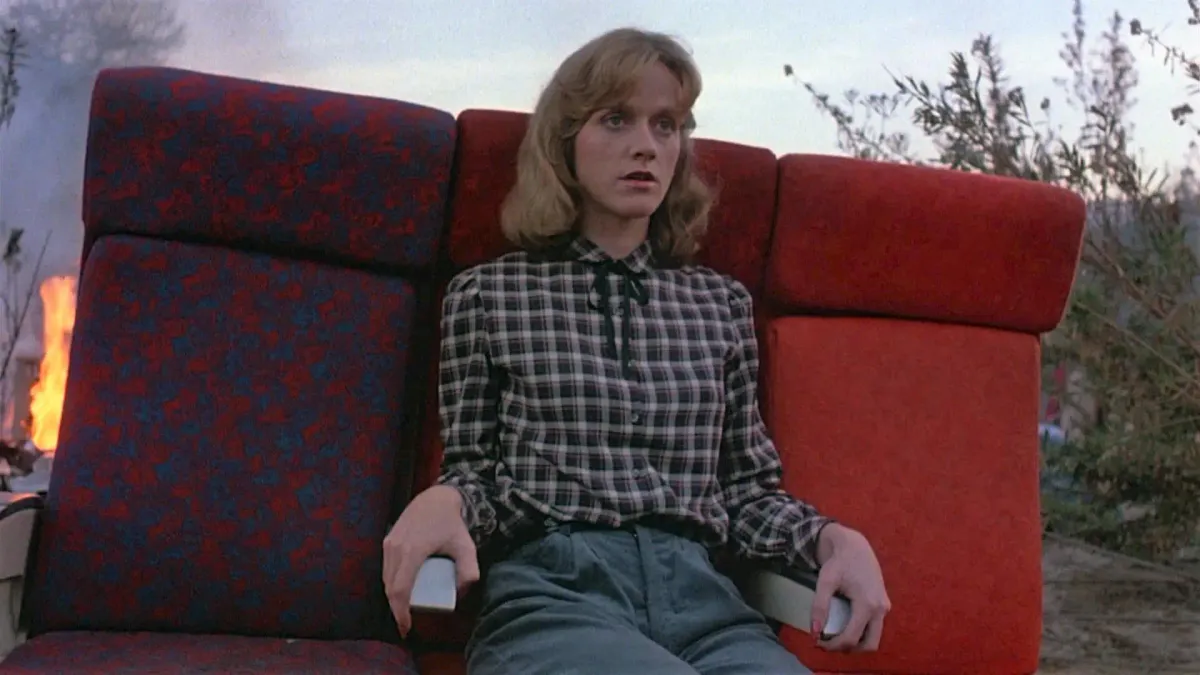
In 1984, Skinner resurfaced. It wasn't in a sensitive New York drama. It was in a low-budget horror film written and directed by Thom Eberhardt. In Sole Survivor, she played Denise Watson, a television commercial producer who walks away from a plane crash without a scratch while everyone else dies.
It was a sharp pivot from the grounded realism of Girlfriends. The budget was a mere $350,000. The theatrical release through International Film Marketing was limited. It was the kind of project designed to vanish into the back rows of a video shop.
For eighty-five minutes, terror.
The survivors — the ones who "should" have died — start seeing things. Dead people. Watching. Approaching. Something in the universe wants to correct the mistake of her survival. It was cosmic error rendered as a slasher film.
Atmospheric Dread and the Carnival of Souls
Sole Survivor wasn't just another 1980s horror flick. Thom Eberhardt favoured atmosphere over jump scares, slow-burn dread over slasher mechanics. He drew from the 1962 classic Carnival of Souls for its atmospheric dread.
Death is patient.
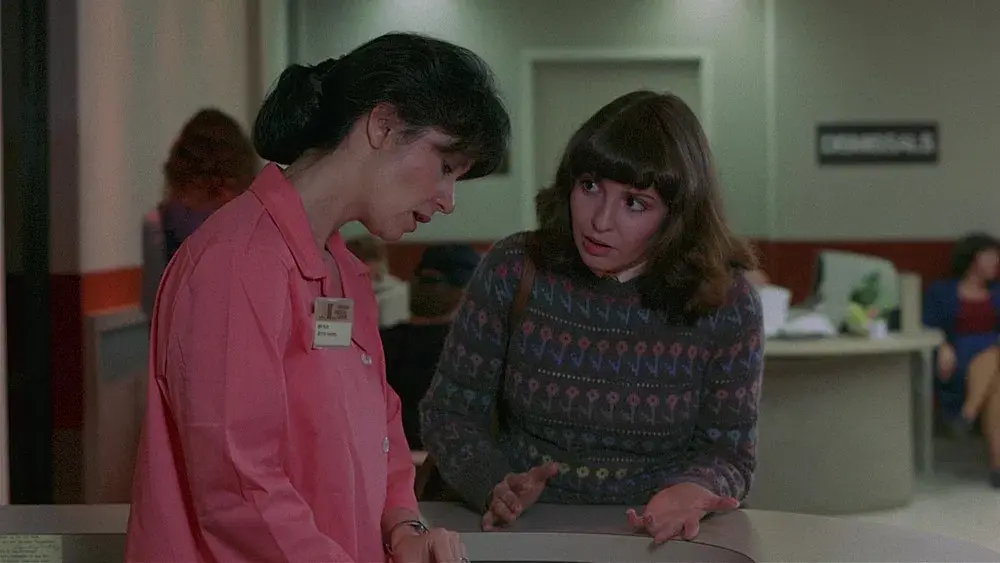
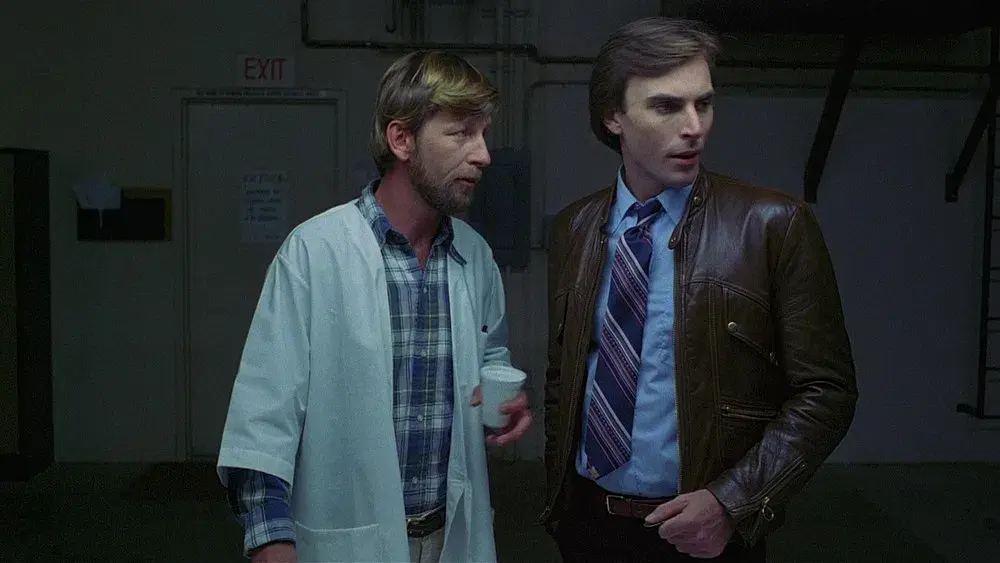
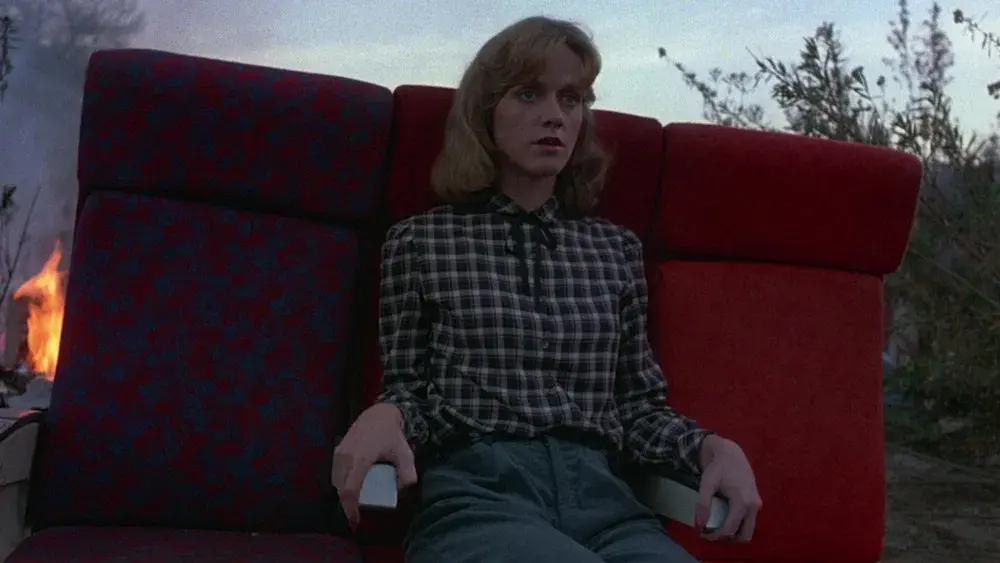
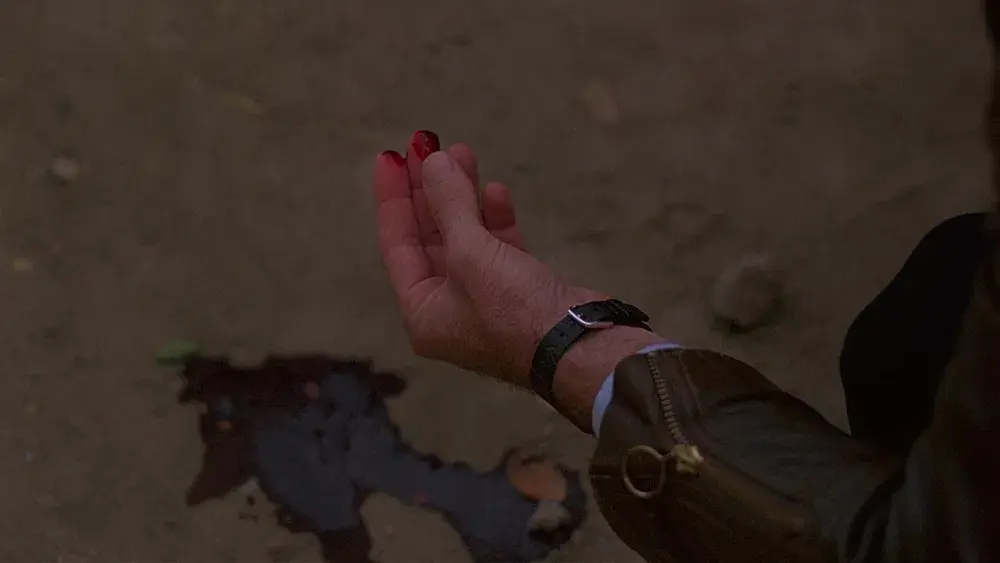
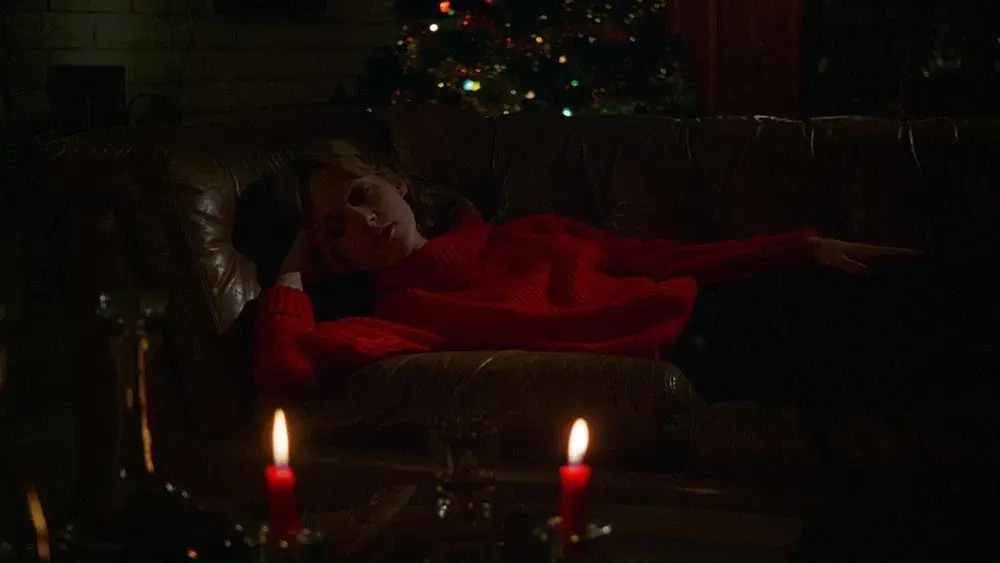
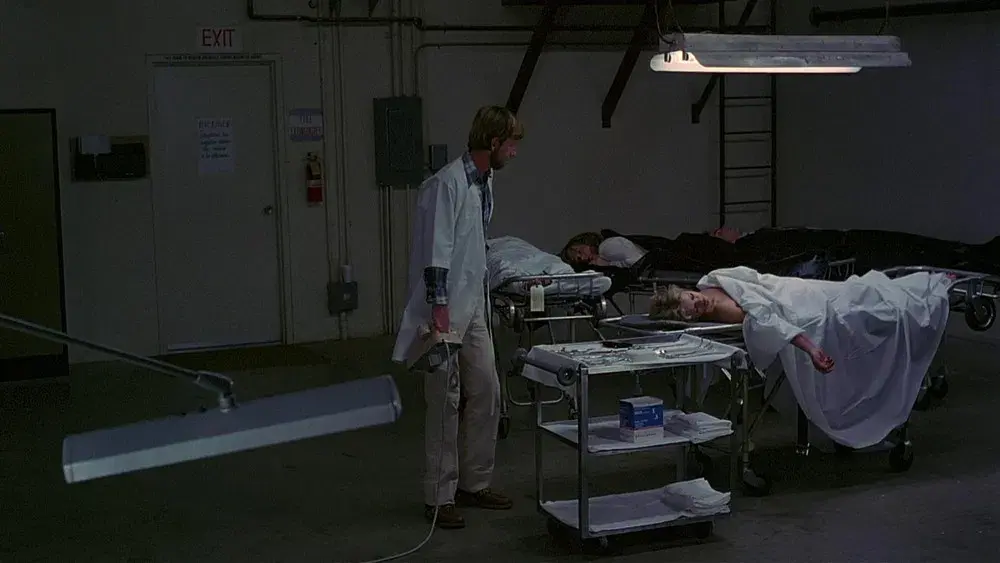
Sole Survivor (1984) Gallery: TMDB
Skinner’s performance as Denise Watson was impressive. Critics noted she displayed "just the right amount of vulnerability and confusion". One reviewer called Denise "one of my favorite horror heroines, funny, charming and kind". She wasn't just a final girl; she was a woman caught in a machinery she couldn't outrun.
The industry wasn't watching. Sole Survivor vanished almost immediately, relegated to VHS obscurity via Vestron Video in 1985. And with it, Anita Skinner vanished too.
 Richard Wells
Seventeen Years Before Final Destination
The tragedy of Skinner’s career isn't just that she left; it's that she left just as she was defining the future of the genre. Seventeen years later, Final Destination would take the premise of Sole Survivor — Death coming to collect those who cheated it — and turn it into a multi-million dollar franchise.


It Follows would borrow the imagery of figures standing in the background, watching, approaching slowly.
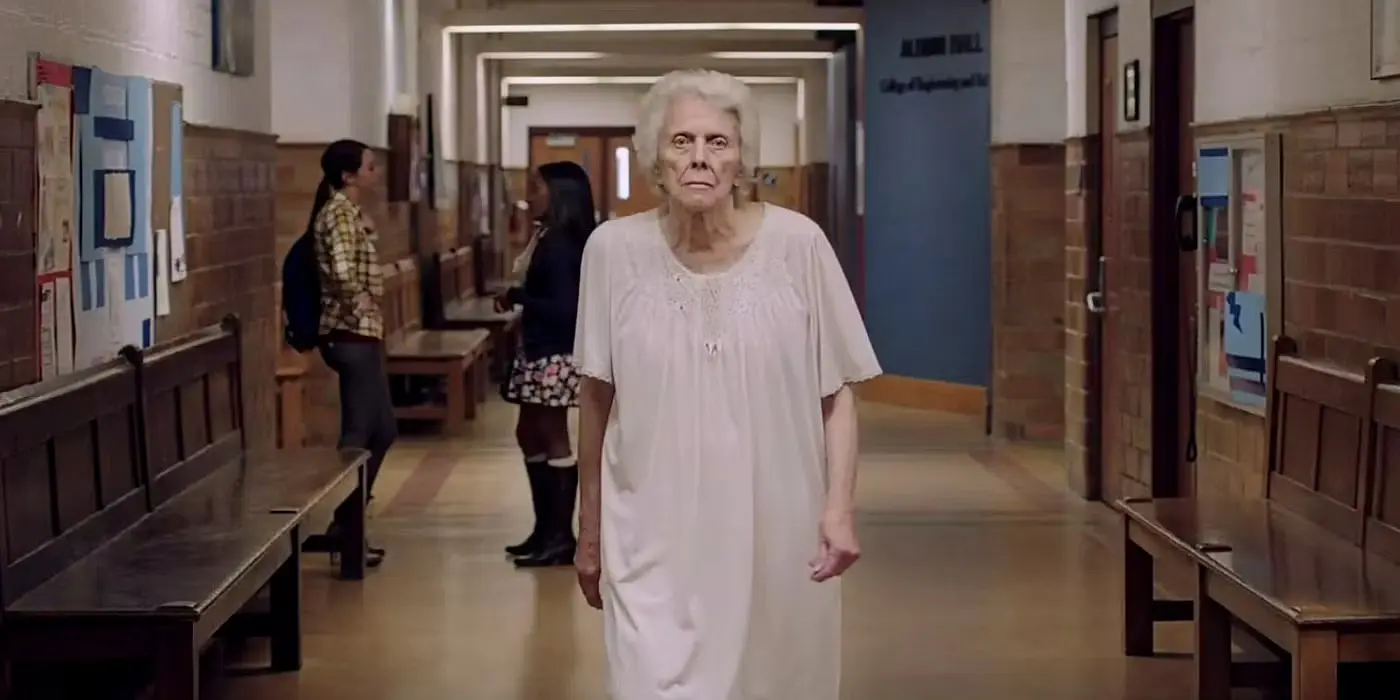
Skinner had anchored the prototype, but by the time the machinery figured out how to monetise the concept, she was long gone.
Not a slow fade. All at once.
By the 2000s, Sole Survivor became a cult curio. Horror writers traced its DNA. Code Red released it on DVD in 2008. But the lead actress remained a ghost. Two films. One Golden Globe nomination. One Kubrick endorsement. One genre-defining horror performance. Then nothing.
The Criterion Restoration She's Missing From
The afterlife of Girlfriends has been even more remarkable than its birth. Lena Dunham championed it, citing it as a primary influence for Girls. Greta Gerwig and Noah Baumbach echoed its themes in Frances Ha. Even Wes Anderson has praised it as a favourite.
In 2019, the Library of Congress selected it for preservation in the National Film Registry. In 2020, Criterion released a 4K restoration with new interviews featuring Claudia Weill, Melanie Mayron, Christopher Guest, and Bob Balaban.
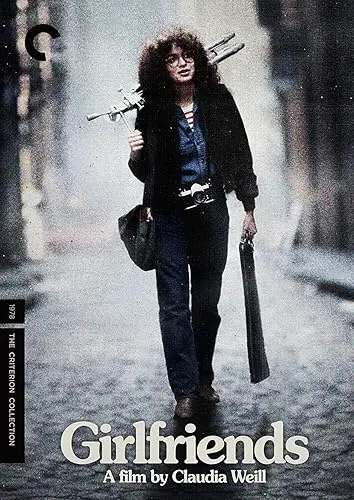
Anita Skinner is notably absent.
Everyone who made that film possible sat down to talk about its legacy. Except the woman whose character set the whole machine in motion. The horror retrospectives praise her performance but can't find her. The feminist scholars analyse her role but have no person to interview.
Birthday Unknown, Birthplace Unknown
The mystery isn't what Anita Skinner is doing today. The mystery is that nobody knows anything. Her IMDb biography is empty. Her Rotten Tomatoes page lists birthday and birthplace as 'Not Available'.
The Movie Database states plainly: 'We don't have a biography for Anita Skinner'. No interviews. No convention appearances. No social media presence. No 'where are they now' updates.
The ghost remains a ghost.
Searches for her current whereabouts yield only unrelated people. She exists only in the frames themselves — Anne leaving the apartment, Denise surviving the crash. Two performances that influenced decades of cinema, yet the woman behind them has vanished into a biographical void.
The Ghost in Two Cult Classics
What does it mean when someone gives everything to the camera and then takes it all back? Anita Skinner didn't just leave Hollywood; she left the record. She gave two perfect performances in two cult classics and then walked away.
That was the cost.
Hollywood is full of people who wanted fame and didn't get it. It's rarer to find someone who got it, earned it, deserved it, and walked away so completely that even their origin becomes a mystery.
Did she leave Hollywood, or did Hollywood fail to keep her? The industry has a way of discarding talent it doesn't understand how to use. It treats women as disposable currency, and when the film is done, the ledger is closed.
They buried her.
Not slowly.
All at once.
Sources
IMDb - Anita Skinner: https://www.imdb.com/name/nm0804206/
IMDb - Anita Skinner Biography: https://www.imdb.com/name/nm0804206/bio/
Wikipedia - Girlfriends (1978 film): https://en.wikipedia.org/wiki/Girlfriends_(1978_film)
Wikipedia - Sole Survivor (1984 film): https://en.wikipedia.org/wiki/Sole_Survivor_(1984_film)
Criterion Collection - Girlfriends: https://www.criterion.com/films/29635-girlfriends
Golden Globes - Anita Skinner: https://goldenglobes.com/person/anita-skinner/
Letterboxd - Sole Survivor: https://letterboxd.com/film/sole-survivor-1984/
CBR - Sole Survivor Final Destination: https://www.cbr.com/sole-survivor-horror-film-final-destination-similarity/