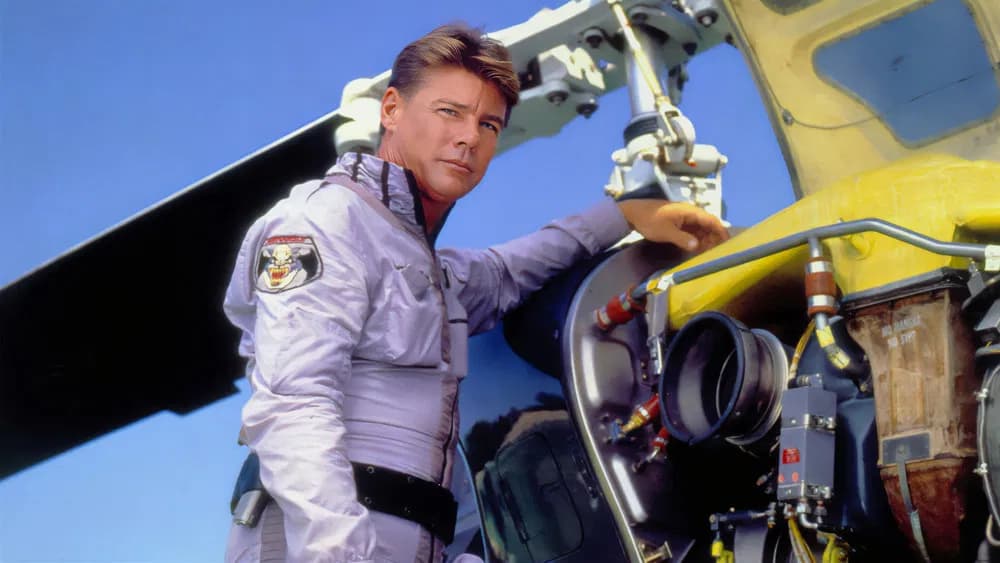
For a brief, electric stretch of the 1970s and 1980s, Jan‑Michael Vincent looked like the real thing. Rugged jaw, surfer’s build, a screen presence that ran somewhere between Steve McQueen and a young Robert Redford. He rode waves in the cult surf drama Big Wednesday, traded punches with Charles Bronson in The Mechanic, and piloted a futuristic attack helicopter in Airwolf — one of the decade’s biggest television hits. At his peak, he was earning a reported $200,000 per episode and gracing magazine covers worldwide.
By 1990, no major studio would insure him. The magazine covers dried up. The phone stopped ringing. Fans who remembered the golden boy from primetime television started asking the same question: what happened to Jan-Michael Vincent?
Jan-Michael Vincent was a popular film and television actor in the 1970s and 1980s, best known for Airwolf and the surfing drama Big Wednesday. His career declined sharply due to severe alcoholism, cocaine addiction, legal troubles, and a near-fatal car accident. Vincent withdrew from acting after 2003 and lived in quiet obscurity until his death from cardiac arrest on 10th February 2019, at the age of 74.
Jan-Michael Vincent
His life story remains one of Hollywood’s starkest cautionary tales — and in 2026, with Airwolf still streaming and fan communities still debating his legacy, it hasn’t lost any of its power.
What Happened to Jan-Michael Vincent?
By the late 1980s, no major studio would touch Jan-Michael Vincent. Not because audiences had forgotten him — Airwolf reruns were still pulling viewers across the globe — but because insurance companies had written him off as an unacceptable risk.
In Hollywood, that distinction matters more than talent. Studios take out completion bonds and liability policies on their lead actors, and if an insurer flags someone as too volatile, too unreliable, or too likely to derail a production, the money vanishes overnight. Vincent hit that wall hard. Cocaine use, alcohol dependency, missed call times, and increasingly erratic behaviour during the Airwolf years had built a file that no underwriter wanted to touch.
What followed was a slow, grinding slide. Smaller roles in low-budget productions through the 1990s. A catastrophic car accident in 1996 that broke three vertebrae in his neck and permanently damaged his vocal cords. Multiple arrests. Then silence. Vincent effectively retired from acting around 2003 and spent his remaining years in North Carolina, far from any camera or red carpet.
The contrast with peers who clawed their way back — Robert Downey Jr. being the most obvious example — only sharpens the tragedy. Downey had the backing of Jon Favreau and Marvel Studios willing to bet on his recovery. Vincent had no such lifeline. By the time anyone might have offered one, the damage was too deep.
The Early Life of Jan-Michael Vincent
Jan-Michael Vincent was born on 15th July 1944 in Denver, Colorado. His family later relocated to Hanford, California, a farming town in the San Joaquin Valley where he grew up and attended high school.
Before Hollywood entered the picture, Vincent served in the California Army National Guard, remaining in the reserves until the early 1970s. His path to acting was largely accidental — a talent scout spotted his striking looks during a visit to Los Angeles, and Universal Studios signed him to a contract shortly after.
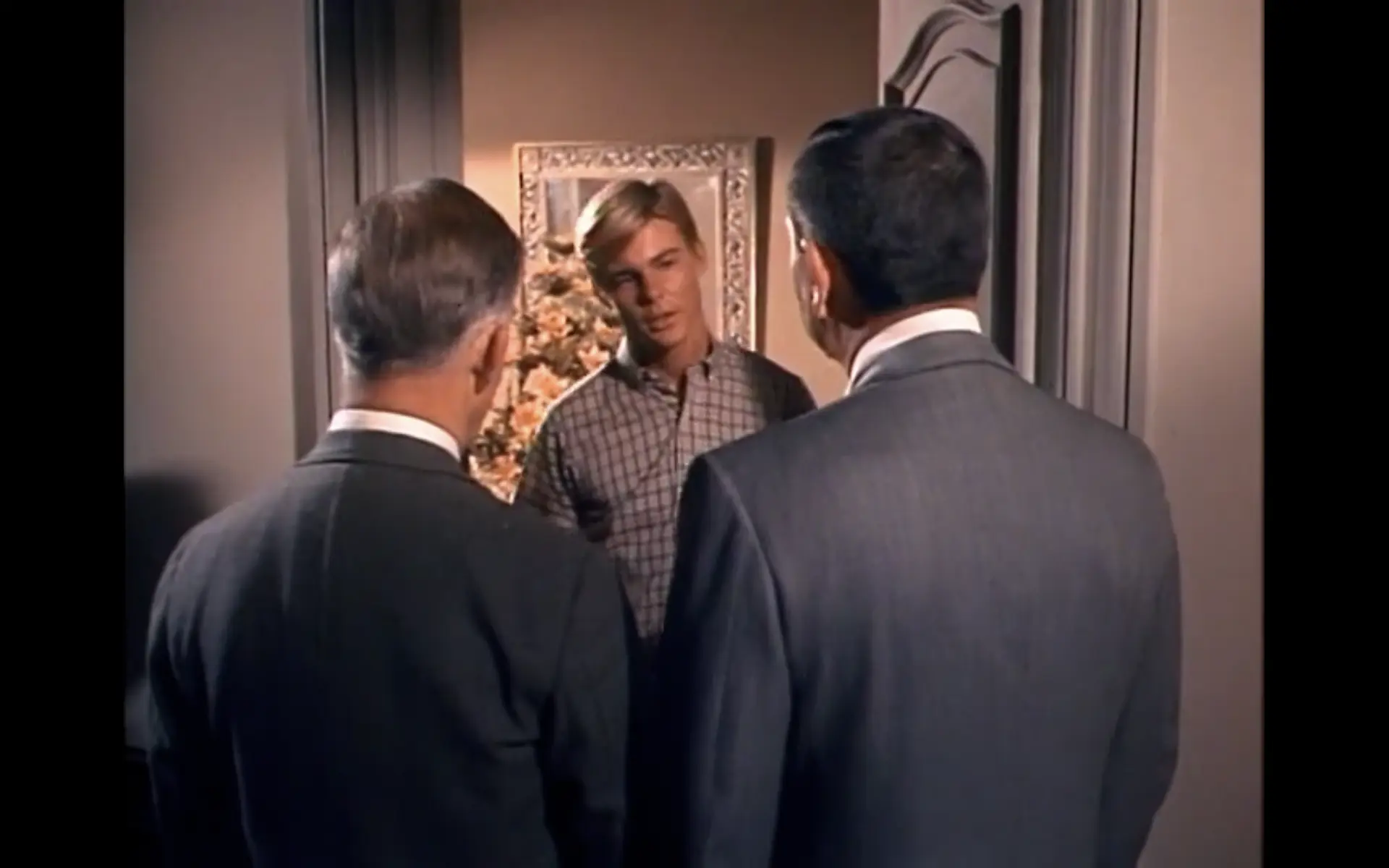
Television became his training ground. He appeared in late-1960s series including Dragnet 1967, testing whether that effortless screen presence could carry a scene. Universal clearly thought it could. They kept feeding him parts, building him steadily toward the leading-man roles that would soon define his career.
Hollywood’s Next Golden Boy in the 1970s
Vincent’s breakthrough came with the drama Going Home in 1971, a performance strong enough to earn him a Golden Globe nomination and put every casting director in town on notice.
The roles came fast after that. He starred opposite Charles Bronson in The Mechanic (1972), playing the kind of quiet, coiled apprentice that suited his natural intensity.
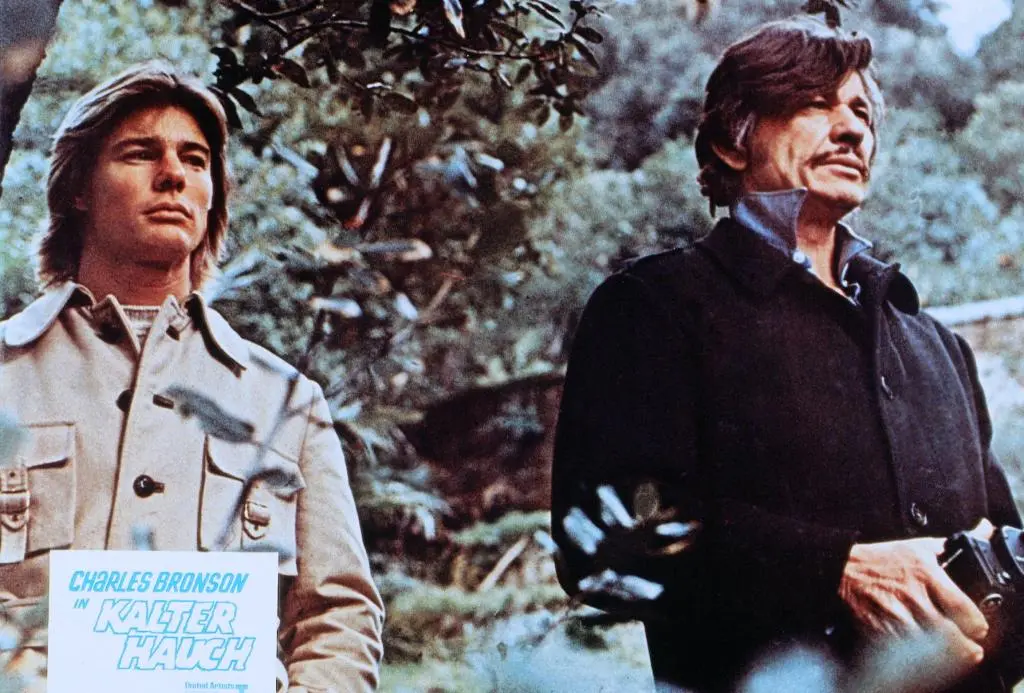
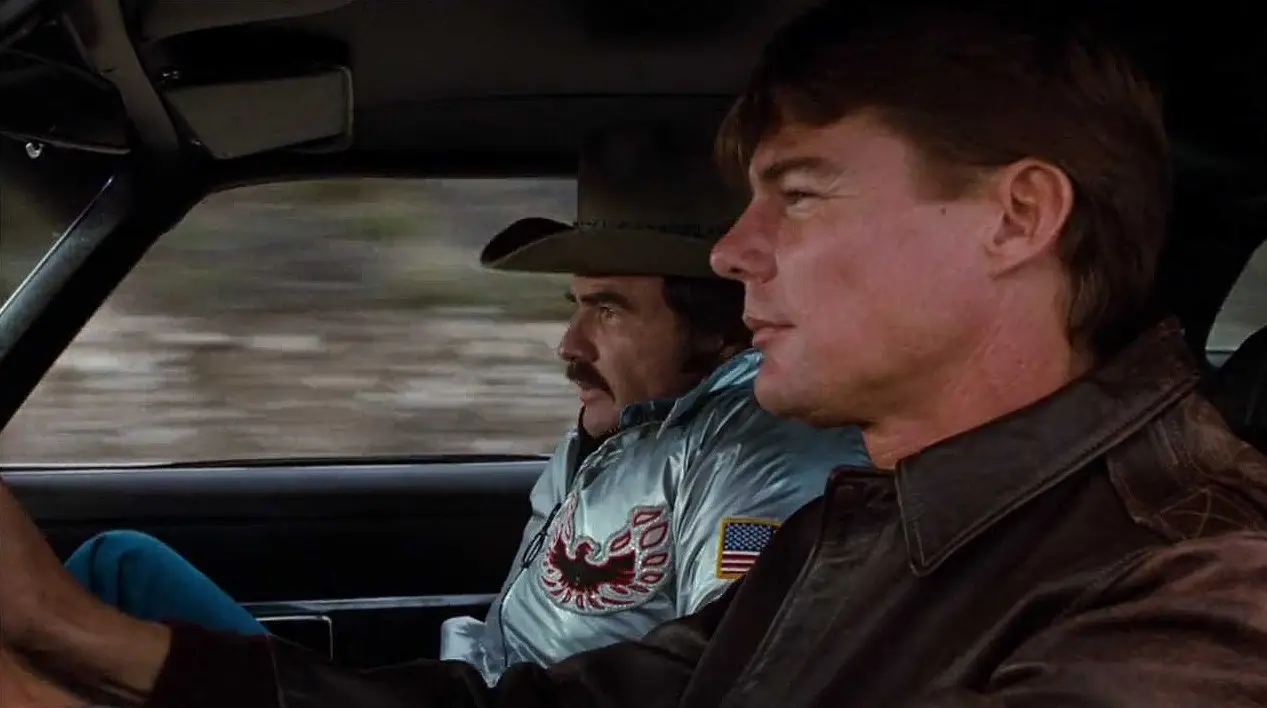
Jan-Michael Vincent in The Mechanic (1972) and Hooper (1978)
White Line Fever followed in 1975 — a trucker revenge picture that leaned hard into the blue-collar action hero archetype the decade loved. Damnation Alley (1977) gave him a post-apocalyptic adventure, and Hooper (1978) paired him with Burt Reynolds in a stunt-world comedy that showed he could handle lighter material too.
These weren’t prestige pictures. They were muscular, populist films built around a very specific 1970s ideal: the working-class tough guy who looked equally convincing behind the wheel of a rig, the handlebar of a motorcycle, or the barrel of a gun. Vincent fit that mould perfectly, and critics noticed something else beneath the machismo — a genuine vulnerability that separated him from the era’s interchangeable action leads.
Big Wednesday and the Rise of a Movie Star
In 1978, director John Milius cast Vincent as Matt Johnson in Big Wednesday, a sprawling surf epic that followed a group of California friends through the social upheaval of the late 1960s and early 1970s. The role required more emotional range than anything Vincent had attempted before — Johnson was talented, reckless, self-destructive, and achingly aware of time slipping away.
I’d argue it remains his finest performance. The physical commitment was obvious (Vincent did much of his own surfing), but the quieter moments — the silences, the drunken self-awareness, the sense of a man watching his best years evaporate — hinted at a dramatic depth most action stars never reach.
Big Wednesday underperformed at the box office on release. It didn’t matter. The film developed a devoted cult following in the years that followed and is now widely regarded as one of the defining surf movies ever made. For Vincent, it cemented something important: this wasn’t just a pretty face. This was an actor.
By the close of the 1970s, he seemed positioned for the kind of career that lasts decades.
Airwolf: $200,000 Per Episode and TV Superstardom
The bridge between Vincent’s film career and his television peak came through The Winds of War (1983), Dan Curtis’s epic World War II miniseries for ABC. The production proved Vincent could handle prestige television — and it caught the attention of the people who would soon offer him the biggest role of his life.
In 1984, Donald P. Bellisario cast Vincent as Stringfellow Hawke in the CBS action series Airwolf. The premise was pure Cold War fantasy: a state-of-the-art military helicopter, hidden in a desert canyon, flown by a reclusive, cello-playing combat veteran on covert missions for a shadowy intelligence agency. Ernest Borgnine co-starred as Hawke’s old friend and partner Dominic Santini, grounding the show’s wilder moments with warmth and gravitas.
The show became a global hit. Vincent’s brooding take on Hawke — part action hero, part haunted loner nursing old wounds — struck a chord with audiences who wanted something darker than the cheerful heroics of The A-Team airing on the same network.
At the peak of Airwolf’s popularity, contemporaneous reports placed Vincent’s salary at around $200,000 per episode, making him one of the highest-paid actors on television. The show ran on CBS from 1984 to 1986 before a lower-budget fourth season was produced in Canada for the USA Network in 1987, without Vincent’s involvement.
For three seasons, he was one of the most recognisable faces in global entertainment. Behind the camera, the picture was already fracturing.
The Turn: Addiction, Erratic Behaviour and Airwolf’s Sudden End
Even during the 1970s, people close to Vincent knew about the drinking. By the Airwolf years, the problems had escalated beyond alcohol into heavy cocaine use, and the consequences were becoming impossible to hide on a working set.
Missed call times. Erratic behaviour between takes. Growing tension with cast and crew. A 2019 Los Angeles Times retrospective noted that Vincent’s cocaine use and unpredictable conduct were major factors in the network’s decision to cancel Airwolf after its third CBS season. The show’s move to Canada for a cheaper, Vincent-free fourth season told its own story.
Behind the vanishing acts: Explore our full database of archival records and investigative profiles.
The entertainment industry’s insurance mechanisms are brutal in their efficiency. Once an actor builds a pattern of unreliability — missed days, on-set incidents, substance-related disruptions — insurers raise premiums or refuse coverage entirely. Without coverage, no studio will hire you. It doesn’t matter how famous you are, how many fans remember your name, or how much talent you still possess. The spreadsheet says no, and the spreadsheet wins.
Vincent crossed that line sometime in the late 1980s. The transition from household name to unhirable happened with a speed that still shocks.
The Accidents That Changed Everything
The private collapse went public in the worst possible way.
Throughout the late 1980s and 1990s, Vincent accumulated a string of arrests — DUI charges, assault allegations, and other alcohol-related incidents that made headlines and confirmed what industry insiders already knew.
Then, in 1996, a car accident in Mission Viejo, California nearly killed him. The crash broke three vertebrae in his neck and left a female passenger seriously injured. Vincent survived, but the physical toll was devastating. His vocal cords suffered permanent damage, leaving him with a noticeably altered voice that made it difficult to work even in the low-budget productions still willing to cast him.
After the accident, whatever remained of his mainstream career disintegrated. The roles that trickled in were direct-to-video affairs, shot quickly and cheaply, bearing no resemblance to the major productions he’d once headlined. The combination of addiction, mounting legal problems, and now serious physical injury made him virtually unemployable by any standard. His final credited screen appearance came in 2003 with the low-budget film White Boy, after which he stepped away from acting for good.
The fall was complete.
From $200,000 an episode to total obscurity in barely fifteen years.
Jan-Michael Vincent’s Obscure Final Years
Vincent spent his remaining years far from Hollywood, living quietly in North Carolina with little contact with the entertainment world.
His health continued to deteriorate. After decades of physical trauma and substance abuse, he developed peripheral artery disease — a condition that severely restricts blood flow to the extremities. In 2012, complications forced the amputation of his right leg below the knee, a fact that only became widely known after a rare 2014 interview surfaced.
He gave almost no interviews. Made no public appearances. The occasional photograph shared online by fans who recognised him showed a man almost unrecognisable from the golden-boy heartthrob of the 1970s, and those images circulated with a mixture of shock and sadness across nostalgia forums.
For someone who had once been one of the most photographed men in American entertainment, the anonymity of those final years carries its own particular weight.
What Happened To?
Check out these articles to see what happened to other big stars who faded from the spotlight:
Is Jan-Michael Vincent Still Alive?
No. Jan-Michael Vincent died on 10th February 2019 in Asheville, North Carolina. The cause of death was cardiac arrest, listed as natural causes on the death certificate filed with Buncombe County.
News of his passing didn’t reach the public until several weeks later, when media outlets obtained the certificate and reported the story — a delay that itself speaks to how far Vincent had drifted from public life. The coverage briefly reignited interest in his career, with Airwolf clips and Big Wednesday tributes circulating across social media.
Some confusion exists around his age at the time of death. Most biographies list his birth year as 1944, which would have made him 74 — but because he died in February, five months before his July birthday, the death certificate recorded his age as 73. Both figures appear in different sources, and neither is technically wrong.
Why Did Jan-Michael Vincent Stop Acting?
The answer is less about choice and more about consequence.
Vincent didn’t announce a retirement or make a graceful exit. His career eroded piece by piece — first through the insurance barrier that locked him out of major productions, then through the physical damage from the 1996 accident that compromised his ability to perform, and finally through the accumulated weight of decades of addiction and legal troubles that left no studio, however small, willing to take the risk.
By the early 2000s, there was simply nothing left to stop doing. The work had already stopped coming.
How Much Was Jan-Michael Vincent Paid for Airwolf?
At the height of Airwolf’s run on CBS between 1984 and 1986, contemporaneous industry reports placed Vincent’s salary at approximately $200,000 per episode. Adjusted for inflation, that figure would exceed $500,000 in 2026 terms — a staggering sum that reflected both the show’s global popularity and Vincent’s status as its irreplaceable lead.
The money didn’t last. Between legal costs, the financial consequences of addiction, and a career that collapsed before he turned 50, the fortune that Airwolf generated appears to have been largely exhausted by the time Vincent withdrew from public life.
Why Jan-Michael Vincent’s Story Still Resonates in 2026
The story of what happened to Jan-Michael Vincent endures because it exposes something uncomfortable about how Hollywood treats its most marketable assets.
He had everything the industry demands: the face, the physique, the screen presence, and — as Big Wednesday proved — genuine acting talent beneath the surface. At his peak he was one of television’s highest-paid performers, recognised on streets around the world. The machinery of stardom was built around him, and for a few years it worked exactly as designed.
When it broke, nobody came to fix it. No intervention from a studio with a financial stake in his recovery. No structured support system of the kind that might — might — exist today. The insurance companies did their calculations, the casting directors moved on, and Jan-Michael Vincent became a cautionary anecdote passed around industry dinners.
His work, at least, has outlasted the circumstances that destroyed his career. Airwolf remains available on streaming platforms and nostalgia television channels, still finding new audiences more than 40 years after its premiere. Big Wednesday continues to appear on surf-cinema lists and retrospective screenings. These aren’t obscure relics — they’re genuinely entertaining pieces of work that hold up on their own terms.
Somewhere on a streaming service right now, a black helicopter is cutting through a desert sky, and Stringfellow Hawke is at the controls — cool, brooding, untouchable. The man who played him spent his last years in a quiet corner of North Carolina, far from any spotlight.
The helicopter flies on without him.