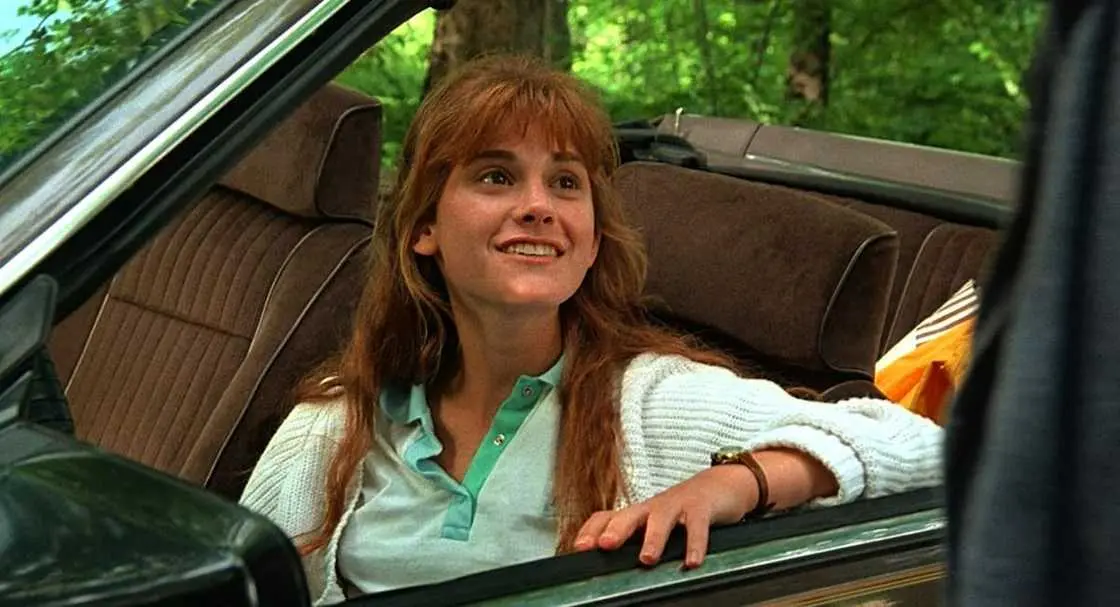
In summer 1984, a 17-year-old from New Jersey skipped camp to audition in Manhattan. Steven Spielberg cast her in The Goonies. Three years later, after starring in three major films, she quit Hollywood to attend Vassar College.
Most actresses don't walk away at their peak. Kerri Green did.
The Audition That Launched Everything
Kerri Green traded summer camp for New York City auditions. Within weeks, she'd caught Spielberg's attention for The Goonies.
She had no agent. No formal training. Just timing and talent.
Filming began October 1984 in Astoria, Oregon. The shoot was brutal—underground caves, water tanks, practical effects. Kerri played cheerleader Andy Carmichael opposite Sean Astin, Josh Brolin, Corey Feldman, and Ke Huy Quan.
The Goonies opened June 1985 as the summer's seventh-highest-grossing film, earning $125 million worldwide. Rolling Stone later ranked it #13 on their 25 greatest movies of the 1980s.
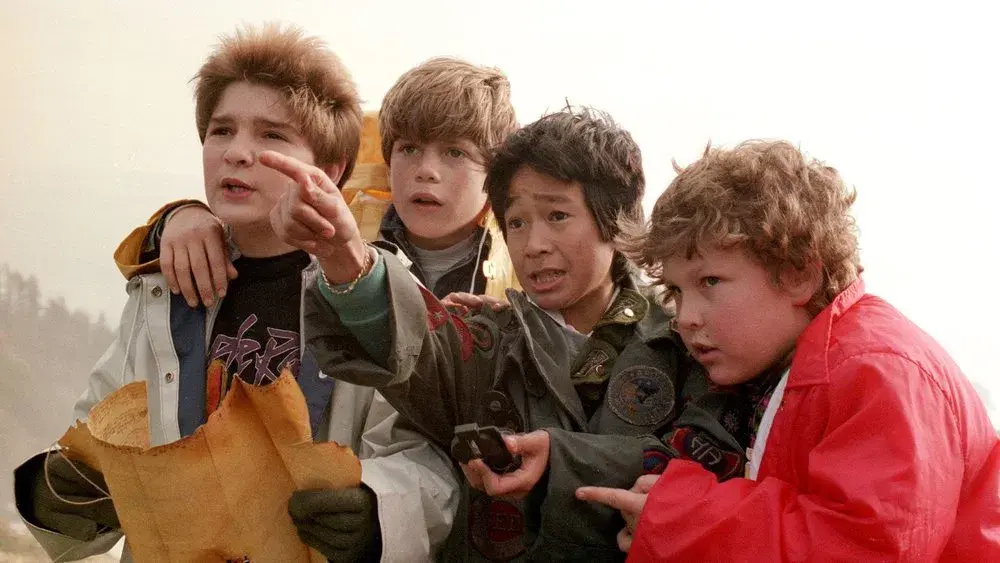
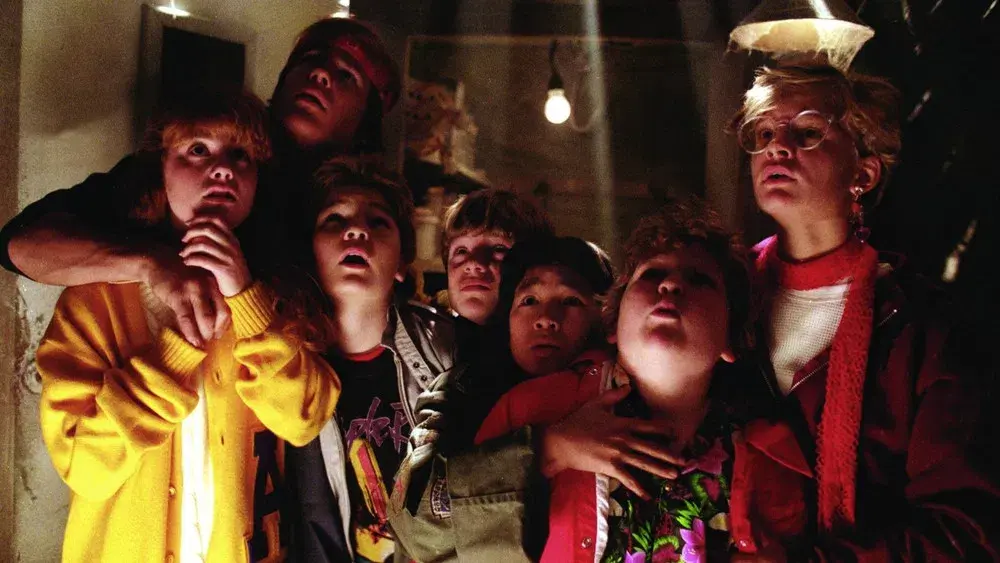


The Goonies Gallery (1985) Courtesy TMDB
Two months after The Goonies premiered, Summer Rental hit theatres. Kerri played John Candy's daughter, earning a Young Artist Award nomination.
Then came Lucas in March 1986.
The Film That Showed Her Range
Kerri played Maggie, caught between Corey Haim's brilliant nerd and Charlie Sheen's kindhearted jock. The cast included Courtney Thorne-Smith and, in her debut, Winona Ryder.
Critics praised it. The Los Angeles Times called it "irresistible." The Washington Post described it as "low-key, sweet and personal."
Lucas is one of the finest teen films of the 1980s—genuine, heartfelt, and honest about adolescence in ways most Hollywood productions avoided. It immortalised the slow clap, the moment when Lucas returns to school after his hospital stay and his classmates rise to applaud him in the corridor. That scene has been referenced and parodied countless times since.
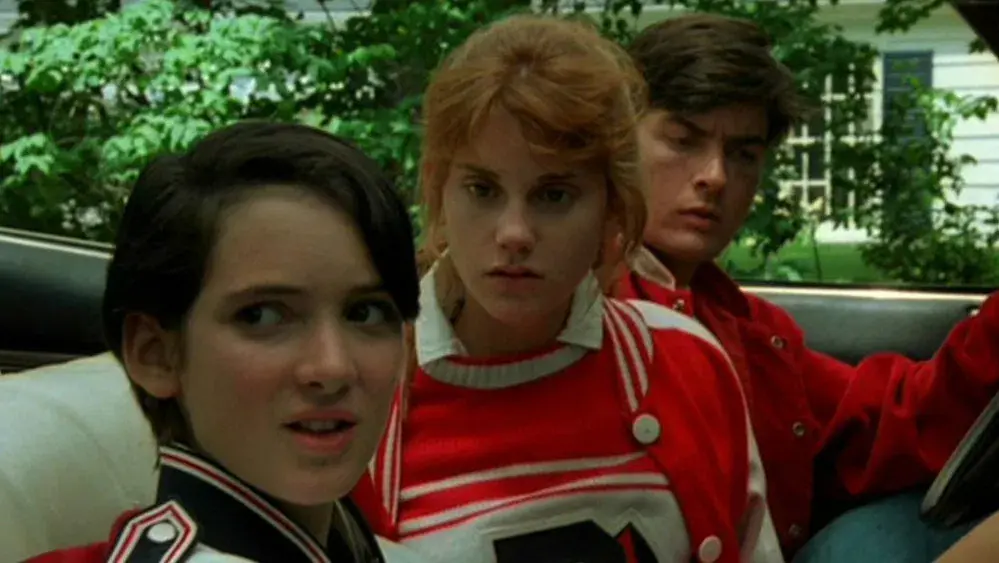
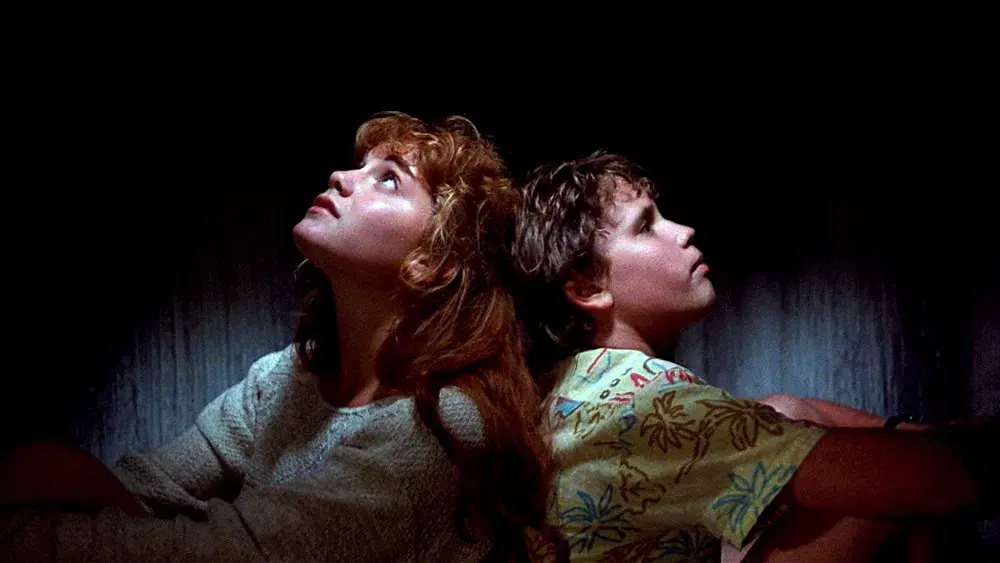
Lucas (1986) Courtesy TMDB
Later controversies surrounding cast members have unfortunately overshadowed the film's brilliance, but Lucas deserves recognition for what it achieved: a teen movie that treated teenagers as complex human beings rather than stereotypes.
Kerri brought nuance to what could've been just the pretty girl. The chemistry felt real. At 19, she'd starred in three significant films in two years.
"I didn't expect to get the part in Lucas. I felt I did a good interview but wasn't what they wanted. You always have to tell yourself that. Dealing with rejections all the time, you can never take it personally. Otherwise, you'll become insecure, asking yourself, 'How come people hate me?' They don't. They're not hiring you because you're not right for the part."
The trajectory looked obvious: bigger roles, longer career, Hollywood's new girl-next-door.
Then Three for the Road bombed in 1987.
The Decision Nobody Expected
Three for the Road reunited Kerri with Charlie Sheen. Critics hated it. Audiences ignored it.
Kerri experienced failure for the first time. Something clicked.
She'd grown up normal in Woodcliff Lake, New Jersey. Banker father, interior designer mother, regular schools, regular life. Then sudden fame. Recognition. Autographs. Money most teenagers couldn't imagine.
Acting was supposed to be a summer thing before college. But The Goonies happened, then Summer Rental, then Lucas.
After Three for the Road flopped, Kerri quit. Enrolled at Vassar College. Majored in Fine Arts.
"It's a tough school. I'm scared to death but excited, too. I want to go to college like the other kids my age, although it will be a little different for me than for most of my friends. They had to adjust to being on their own for the first time, while that's what I've been doing for the past years. As much as I look forward to taking classes, I want to learn about other people. I'm curious about everything, and it would be silly to miss out."
Read Next
From the Vault
What Happened at Vassar
Whilst Sean Astin navigated Hollywood's teen-to-adult transition and Josh Brolin struggled to find his footing, Kerri Green disappeared into Vassar's campus in Poughkeepsie, New York.
She didn't just attend classes. She committed completely.
Kerri majored in Fine Arts, studying composition, theory, and the creative process behind storytelling. The girl who'd acted on instinct at 17 now studied the craft academically. She analysed what made performances work, what made stories resonate, why certain artistic choices landed whilst others fell flat.
During those four years, she made exactly one professional appearance—the 1993 TV movie Blue Flame. That's it. No auditions. No meetings with agents. No attempts to maintain visibility.
Friends from Hollywood probably called. Offers likely came in. The entertainment industry doesn't like it when teenage stars walk away—there's money to be made, momentum to capitalise on.
Kerri ignored it all.
She graduated cum laude with a Bachelor of Fine Arts in 1989. The accomplishment meant something. She'd proved she could succeed outside Hollywood's ecosystem, that her identity wasn't tied to three years of fame.
But Vassar taught her something else: she still loved film. Just not acting. The stories themselves mattered more than being in front of the camera.
After graduation, whilst her former co-stars were fighting for roles and relevance, Kerri took a job that would change everything: working with homeless youth at Covenant House of California.
Behind the vanishing acts: Explore our full database of archival records and investigative profiles.
Behind The Camera
Covenant House serves young people aged 18-24 experiencing homelessness—providing immediate shelter, medical care, meals, and the transition support most need to escape the streets. Kerri saw realities that Hollywood never prepared her for.
Kids sleeping rough. Teenagers pregnant with nowhere to turn. Young mothers attempting to finish school whilst raising babies alone.
The work was difficult. The stories stayed with her.
In 1996, Kerri and colleague Bonnie Dickenson founded Independent Women Artists—a production company focused on telling stories Hollywood wouldn't touch.
Their first project came from an unusual source: a writing workshop with students at Ramona High School and participants in the Pacoima Young Mothers programme in Los Angeles. The women's stories—raw, unfiltered, heartbreaking—became a play called Bellyfruit.
It premiered at the Los Angeles Theatre Centre in March 1996 as a benefit for Gramercy Court, a home for young mothers and their babies. Kerri directed. The response convinced her it needed to reach more people.
Directing Her First Film
She spent the next three years adapting it for film. The process, she later joked to Film Threat, involved "Prozac. Just kidding."
In reality, it involved:
- Agonising over the screenplay with co-writers Maria Bernhard, Susannah Blinkoff, and Janet Borrus
- Fundraising through grants and whatever free resources they could scrounge
- Storyboarding the entire film with cinematographer Peter Calvin
- Conducting statistical and psychological research on the teen pregnancy population
The film version of Bellyfruit followed three teenage girls—a 14-year-old African American foster kid, a 13-year-old wild child, and a 16-year-old Latina beauty—whose lives intersect through unplanned pregnancy. Three separate but related stories woven together, based on real experiences from the young mothers who'd participated in the workshop. (Full movie available on YT)
Variety praised it as "a sympathetic portrait of the girls that, thankfully, remains free from sentiment… Bellyfruit, mounted first as a play, has a gritty look and feel that serve its material well."
In that 2000 Film Threat interview, Kerri explained what drew her to the subject:
"Teen pregnancy is not only an education issue, it is also a poverty issue, and an emotional one. Kids who feel like they have nothing in this world, and no hopes for the future—college or an exciting career or other ways to create a strong self-image—often look to early parenthood as a way to become someone important."
She'd researched the statistics. 87% of teen mothers lived in poverty.
"But then when the reality of what it takes to be a parent becomes clear, and when some of these teen parents are incapable of doing the job… for the ones who are too young, with no support, no emotional maturity, the scenario becomes tragic for all involved."
The numbers told one story. The young mothers she'd met at Covenant House told another. Bellyfruit tried to bridge that gap—showing not just the statistics but the human beings behind them.
When asked if she'd experienced prejudice as a female filmmaker, Kerri was pragmatic:
"Because we did Bellyfruit independently I was free to pursue my own 'female' vision of things, with budgetary and time constraints replacing the political and commercial restraints of 'Hollywood'. It's always a trade off."
The film featured a young Michael Peña in an early role. Bonnie Dickenson produced and acted alongside Kerri's direction.
Bellyfruit wasn't a commercial success. The $1 million budget barely broke even, if at all. But it accomplished something more important: it gave voice to girls nobody was listening to, and proved Kerri could direct with the same authenticity she'd brought to acting.
Then she stepped away from Hollywood again.
The Private Life She Built
In the late 1990s, Kerri Green married and had two children. She began using the professional name Kerri Lee Green—possibly adopting her husband's surname.
That's nearly all anyone knows for certain.
She lives in Los Angeles with her husband and children. That's the extent of verifiable information.
No social media presence. No Instagram photos. No Twitter threads. In an era when celebrities monetise every aspect of their lives—posting breakfast photos, sharing parenting struggles, livestreaming therapy sessions—Kerri maintains complete silence.

She made scattered professional appearances: Mad About You in the 1990s, Murder, She Wrote, a 2001 ER episode as a mother facing unwanted pregnancy. In 2012, she appeared in the indie drama Complacent.
In 2017, she attended New Jersey Horror Con with Sean Astin for a Goonies reunion. She signed autographs, posed for photos, answered questions graciously. Then disappeared again.
On February 3, 2025, she joined a Goonies reunion at Ke Huy Quan's hand-and-footprint ceremony at the TCL Chinese Theatre in Hollywood. Attendees included co-stars like Josh Brolin, Corey Feldman, Jeff Cohen, and writer Chris Columbus. Quan publicly expressed enthusiasm for a potential Goonies sequel during the event, though Green hasn't commented on it. This event reignited sequel rumors, but no concrete developments have emerged as of early 2026.
Green is scheduled to appear at FAN EXPO Vancouver from February 14–16, 2026, where she'll meet fans and likely discuss her Goonies role. This is promoted as a chance to "meet the talent behind the popular girl-turned-treasure hunter." It's her first confirmed public event of 2026 and continues her occasional con circuit participation.
Kerri Green traded her pom poms for pirate ship adventures in The Goonies 🎹 Get your tickets to meet the talent behind the popular girl-turned-treasure hunter at #FANEXPOVancouver2026: https://t.co/hfhAVi2imh#TheGoonies #KerriGreen #Vancouver pic.twitter.com/U4M1IPSc4A
— FAN EXPO Vancouver (@FANEXPOVAN) January 8, 2026
The Mystery Of Why
People want explanations. Why would someone walk away from fame? What happened?
The truth is probably boring: nothing happened. No trauma. No scandal. No exploitation story.
In a 2010 interview, Kerri described her first on-screen kiss with Josh Brolin as "totally embarrassing" and "humiliating"—not because Brolin did anything wrong, but because she was 17 and self-conscious and being filmed.
Maybe that's the answer. Acting wasn't natural for her. It was work, pressure, scrutiny. She did it well but didn't love it enough to make it her entire life.
Kerri chose differently.
She married someone outside the industry. Raised children away from paparazzi. Directed one film that mattered to her, then focused on family. When she wants to participate in Goonies nostalgia, she does. When she doesn't, she doesn't.
No apologies. No explanations. No memoir revealing Hollywood secrets.
In 2000, she told Film Threat that working independently freed her to pursue her own vision "with budgetary and time constraints replacing the political and commercial restraints of 'Hollywood'."
Twenty-five years later, she's still making that choice—freedom over fame, privacy over platforms, family over followers.
What The Goonies Became
Whilst Kerri built a private life, The Goonies became a cultural phenomenon.
The house in Astoria, Oregon became a pilgrimage site. The film inspired video games, board games, endless merchandise. In 2017, the Library of Congress selected it for the National Film Registry.
Kerri's former co-stars embraced the legacy.
They attend reunions. Sign autographs. Trade on nostalgia.
Kerri shows up occasionally but doesn't monetise the past.
Recent Goonies reunions have featured most of the original cast. Kerri's name appears in some promotional materials but not others. Sometimes she attends. Sometimes she doesn't.
After four decades, that's become her pattern.
The Choice That Mattered
Kerri Green refused to be defined by teenage success.
She could've spent 40 years riding Goonies fame. Convention circuits, cameos, reality shows, Instagram. The easy path.
Instead: college, directing, production company, family. A life where "Andy from The Goonies" was something she did once, not something she became.
In an era when every former child star writes memoirs about trauma and exploitation, Kerri simply left. No drama. No tragedy. No cautionary tale.
She recognised what she wanted—education, family, creative work on her own terms—and pursued it without apology. Most actors spend careers chasing fame. Kerri found it at 18, examined it closely, and decided it wasn't worth the cost.
The Goonies endures. Lucas gets discovered by new generations. But Kerri Green's real achievement is something Hollywood rarely celebrates: she knew when to walk away.
Sources
- Biography.com - The Goonies Cast: Where Are They Now?
- Film Threat - Kerri Lee Green: From Hollywood Actress to Indie Director (2000)
- IMDb - Kerri Green Biography and Filmography
- Box Office Mojo - The Goonies Box Office Data
- Rotten Tomatoes - Lucas Critical Reception
- Box Office Mojo - Lucas Box Office Data
- The Numbers - Three for the Road Box Office
- Vassar Miscellany News Archives
What's your favourite Kerri Green role—Andy in The Goonies, Maggie in Lucas, or Jennifer in Summer Rental? Share your thoughts below.