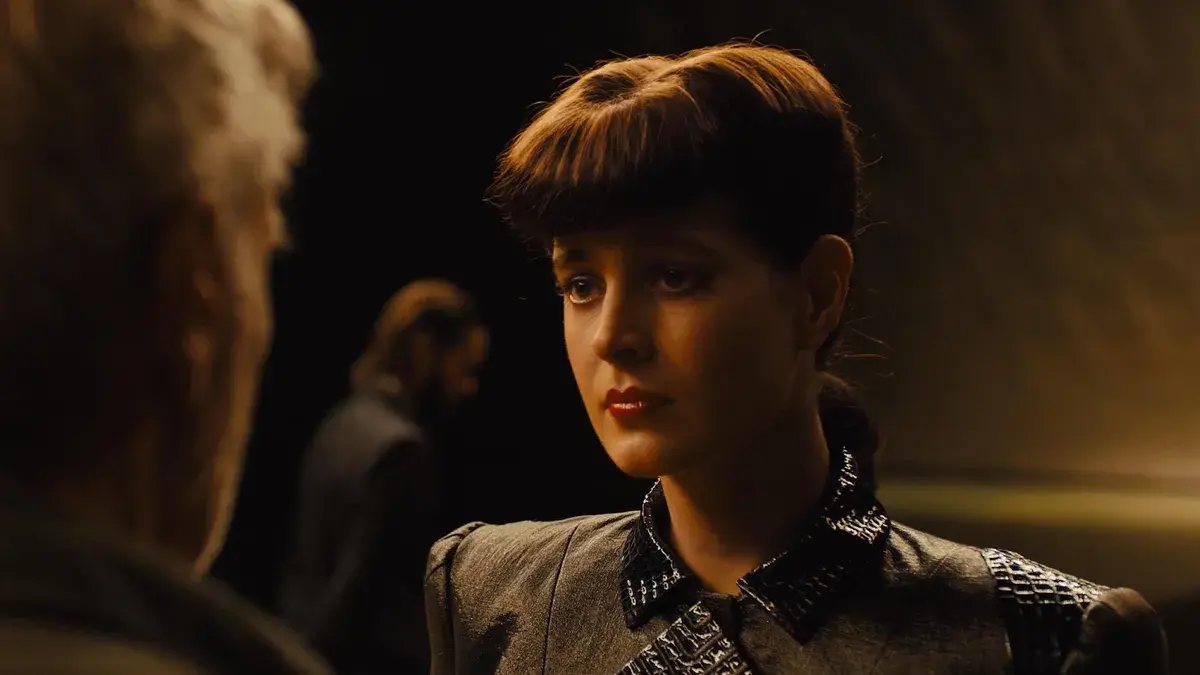
In 1982, Sean Young became cinema's most unforgettable artificial woman. As Rachael in Blade Runner, she embodied something Hollywood hadn't quite seen before—glacial beauty concealing mechanical vulnerability, seductive poise masking existential terror. She wasn't just acting opposite Harrison Ford. She was defining sci-fi femininity for a generation.
By the mid-90s, the industry had rewritten her story.
No longer the sophisticated leading lady who held her own against Ford and Kevin Costner. Now she was the cautionary tale. The "difficult" actress. The one who ambushed executives in homemade costumes. The woman Hollywood never quite forgave.
But which version is true?
Was Sean Young a victim of her own eccentricity, or a woman crushed by a studio system that celebrated in men what it punished in her? Today, at 66, she lives quietly in Austin, Texas—far from Hollywood's machinery, still working, still surviving. Three decades later, her trajectory reveals less about one actress's choices and more about the machinery that chews up women who refuse to play compliant.
Louisville, Kentucky
Interlochen Arts Academy, Michigan (graduated)
School of American Ballet, New York City (training)
Before the Fall: Media Royalty and Ballet Dreams
Born Mary Sean Young on November 20, 1959, in Louisville, Kentucky, she arrived into a family steeped in media.
Her mother, Lee Guthrie (née Mary Lee Kane), was an Emmy-nominated producer, screenwriter, and journalist who wrote for Cosmopolitan and penned biographies on Cary Grant and Jackie Onassis. Her father, Donald Young Jr., was an Emmy-winning television news producer.
Media royalty, essentially.
But according to Young, her mother lacked the management instincts to navigate her daughter's early fame. The relationship was "abusive"—something Young would later process through a Jungian lens as "the unlived life of the parent" after inheriting Guthrie's belongings following her death in 2012 at age 76 from complications related to scoliosis and osteoporosis.
She has siblings: an older brother, Donald Young III, and a sister, Cathleen Young, who carved out her own Hollywood success writing for MacGyver and Dr. Quinn, Medicine Woman.
Raised in Cleveland Heights, Ohio, Young attended Cleveland Heights High School before graduating from Interlochen Arts Academy in Michigan. She trained as a dancer at the School of American Ballet in New York City—honing that elegant, controlled presence that would become her signature—and worked as a model.
Irish, English, and Swiss-German ancestry. Poised. Polished. Ready.
Behind the vanishing acts: Explore our full database of archival records and investigative profiles.
The Golden Run: When Hollywood Couldn't Get Enough (1981–1987)
Between 1981 and 1987, Sean Young didn't just work.
She dominated.
Jane Austen in Manhattan (1980) marked her film debut—a Merchant Ivory production that suggested period drama might be her lane. But Young had range. Stripes (1981) proved she could navigate the boys' club of 80s comedy opposite Bill Murray and Harold Ramis. Young Doctors in Love (1982) showcased her in Garry Marshall's soap opera parody.

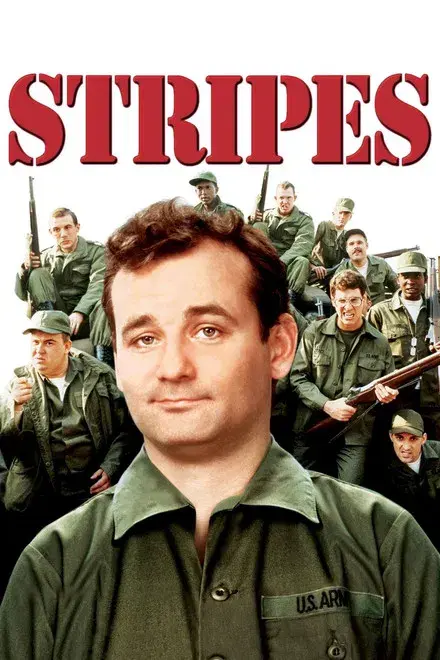
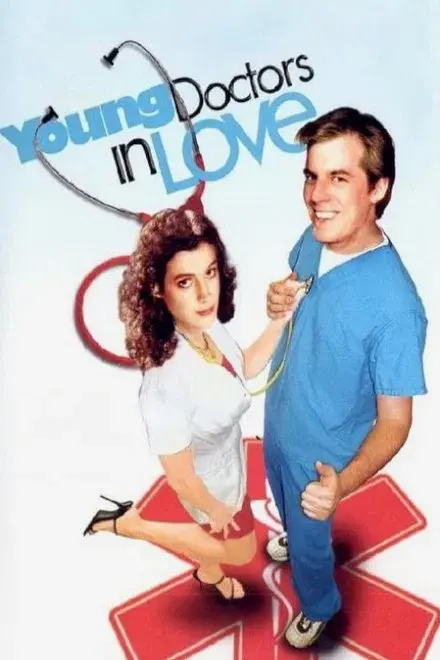
Sean Young First Films Gallery
Then came Blade Runner.
As Rachael, the experimental replicant who doesn't know she's artificial, Young delivered the emotional core of Ridley Scott's masterpiece. That scene where she realises her memories are implants? The vulnerability beneath the shoulder pads and red lipstick?
It wasn't just acting. It was architecture.
The role earned her cult status that persists today—fans still quote her delivery of "You think I'm a replicant, don't you?" like scripture.
Dune (1984) followed. Playing Chani in David Lynch's sprawling epic, she anchored the film's narrative despite notorious production chaos. Baby: Secret of the Lost Legend (1985) let her flex action-heroine muscles in a dinosaur adventure. No Way Out (1987) opposite Kevin Costner generated electric chemistry in a political thriller that grossed over $35 million domestically and cemented her status as both sex symbol and dramatic powerhouse.
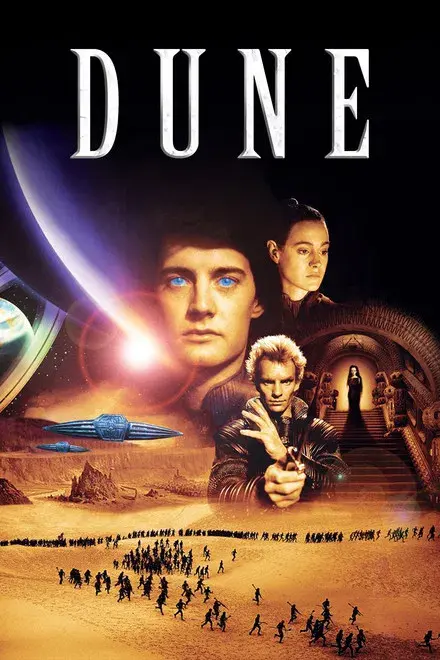
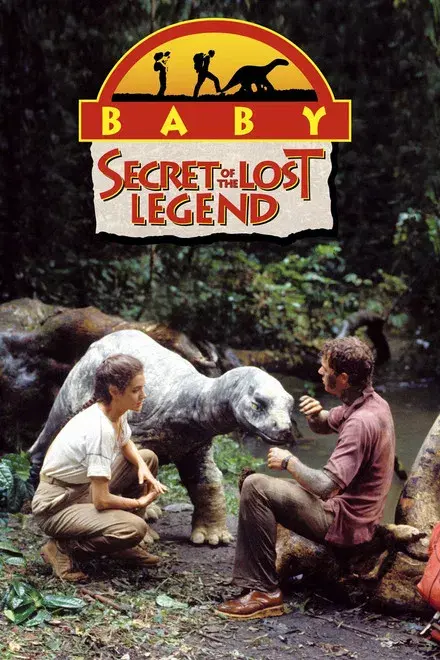
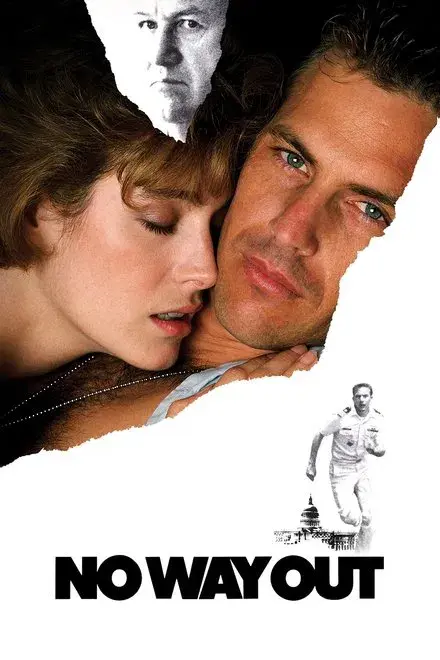
Sean Young's Films After Blade Runner
Even Wall Street (1987)—where she played Kate Gekko, wife to Michael Douglas's Gordon—should have been a triumph.
Should have been.
Over 130 film and television credits would follow across her career. But by the late 80s, the cracks had already begun to show.
The Cracks Begin: When Honesty Became "Difficult"
Young would later admit she lacked "self-preservation skills."
No filter. No self-censorship.
In an era demanding compliant actresses who smiled through indignity, she spoke her mind.
"What I didn't know in my early career was very good self-preservation skills. I didn't know how to censor myself at all."
On the Wall Street set, tensions with Oliver Stone reportedly flared after she defended co-star Daryl Hannah. Stone allegedly retaliated by slashing her role. On The Boost (1988), co-star James Woods later sued her for $2 million, claiming she harassed him with "macabre gifts" including a disfigured doll.
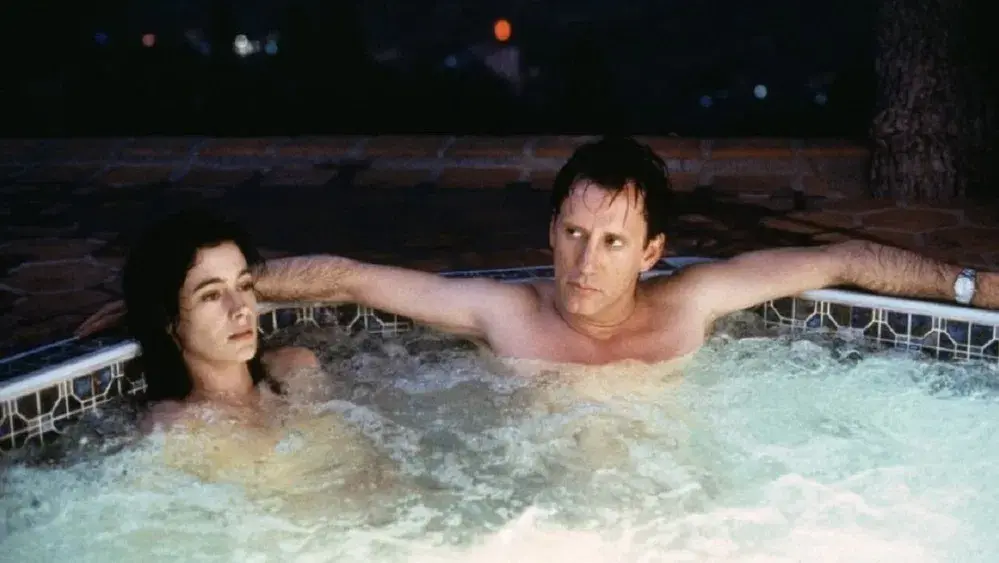
Young denied everything.
Her version? Woods was retaliating after she rejected his advances.
The lawsuit settled out of court in 1990. Woods paid her $227,000 in costs. But the "crazy" label stuck like tar.
The Pattern Emerges
Worse revelations would emerge years later. Young accused Ridley Scott of unwanted advances during Blade Runner, leading to an uncomfortable love scene with Harrison Ford. Charlie Sheen harassed her on set with derogatory signs whilst battling drug addiction. Warren Beatty fired her from Dick Tracy (1990) after she rebuffed him—Beatty denied this, but Young maintained her truth.
And then there was...
During Love Crimes (1992), Weinstein exposed himself. After she rejected him, he reportedly sabotaged her career with quiet efficiency.
"The industry has always been predatory."
By then, the pattern was undeniable. Speak up? You're difficult. Say no? You're blacklisted. Fight back? You're unhinged.
But two incidents crystallised her "crazy actress" reputation in the public eye. Both involved costumes. Both involved desperation. Both became tabloid folklore.
Batman and Catwoman: Ambition Meets Ridicule
The Batman Jinx
Cast as Vicki Vale in Tim Burton's Batman (1989), Young broke her arm during rehearsals.
A horse. A fall. Career trajectory shattered.
Kim Basinger replaced her, and Young watched from the sidelines as the decade's biggest blockbuster—$411 million worldwide—became the role that got away. She called it a "terrible trajectory" setback. The universe, it seemed, had other plans.
The Catwoman Incident
Two years later, Young wanted redemption. Burton was casting Catwoman for Batman Returns. She deserved an audition. She'd earned it.
But no one was returning her calls.
So in 1991, she donned a homemade leather suit and ambushed Warner Bros. executives—including Burton himself—to demand consideration. She also appeared on Joan Rivers calling them out!
Some saw bold self-advocacy. The tabloids saw unhinged desperation. Batman Returns went to Michelle Pfeiffer. Young's reputation went to tabloid hell.
The Double Standard
Here's the thing: Bill Murray threw tantrums and ghosted directors. Celebrated as eccentric genius.
Marlon Brando demanded ridiculous contract riders and refused to learn lines. Revered as method acting.
Klaus Kinski terrorised entire film sets with violent outbursts. Considered passionate artistry.
Sean Young wore a homemade costume to fight for a role she'd lost through injury.
Branded crazy forever.
Read Next
From the Vault
Against the Odds: When Jim Carrey Fought for Her
In 1994, something unexpected happened. Jim Carrey wanted Sean Young for Ace Ventura: Pet Detective.
The studio didn't. They wanted someone else. Carrey fought for her anyway.
Young played Lt. Lois Einhorn, the film's antagonist—a tough Miami detective later revealed to be former kicker Ray Finkle. The role was controversial, the film was ridiculous, and audiences loved it. Ace Ventura grossed $107 million worldwide, launching Carrey into superstardom alongside The Mask and Dumb & Dumber that same year.
"The audience was in stitches within 3 or 4 minutes of the beginning, and it did not stop," Young later recalled.
She'd survived the Catwoman humiliation. She'd landed a major studio comedy despite the "difficult" label. For a moment, it looked like redemption.
Then the 2000s arrived.
The Alcohol Years: Survival Mode
By the 2000s, the roles had dried up.
Not completely—Young was too talented, too iconic, to disappear entirely. But the blockbusters stopped calling. The prestige projects went elsewhere. Hollywood had decided who she was, and the narrative stuck.
She relocated to Sedona, Arizona, prioritising family over the Hollywood machine.
"I'm really grateful that I got to have a family."
In 1990, she married actor and composer Robert Lujan. They divorced in 2002, remarried in 2011—a relationship that survived Hollywood's gravitational pull. Their sons, Rio Kelly (born 1994) and Quinn Lee (born 1998), became her anchor.
Skating With The Stars
2010. She appeared on ABC's Skating with the Stars paired with professional skater Denis Petukhov. She was eliminated first, appearing in only 2 episodes when the show premiered in November 2010.
This was the same year she was cast on The Young and the Restless (2010-2011) playing the "devious Meggie McLaine."
But alcohol became a problem.
A 2008 Oscars party incident made headlines.
By 2011, she appeared on Celebrity Rehab, publicly wrestling with addiction. She's been sober since.
The work continued, just smaller. TV guest spots on CSI, Reno 911!, ER. Horror films like Jug Face (2013) and Bone Tomahawk (2015). Indie projects that paid bills rather than made careers.
Playing doomed B-movie star Susan Cabot felt personal.
"A cautionary tale about ambitious people in Hollywood."
She directed Dating in LA (2007), a short film. Her son Quinn contributed visual effects to Blade Runner 2049 (2017), where Young reprised Rachael via CGI and archival footage—a role she accepted for family health benefits despite calling the film "full of shit."
Work. Family. Survival.
Where She Is Today: Austin, Autographs, and Unlikely Peace
Today, Sean Young lives in Austin, Texas, running Austin Film Tours and practising yoga. She maintains a YouTube channel (MSYPariah) and claims to have 30 years of footage for potential projects. She has a dog. She has her sons. She has distance from the machine.

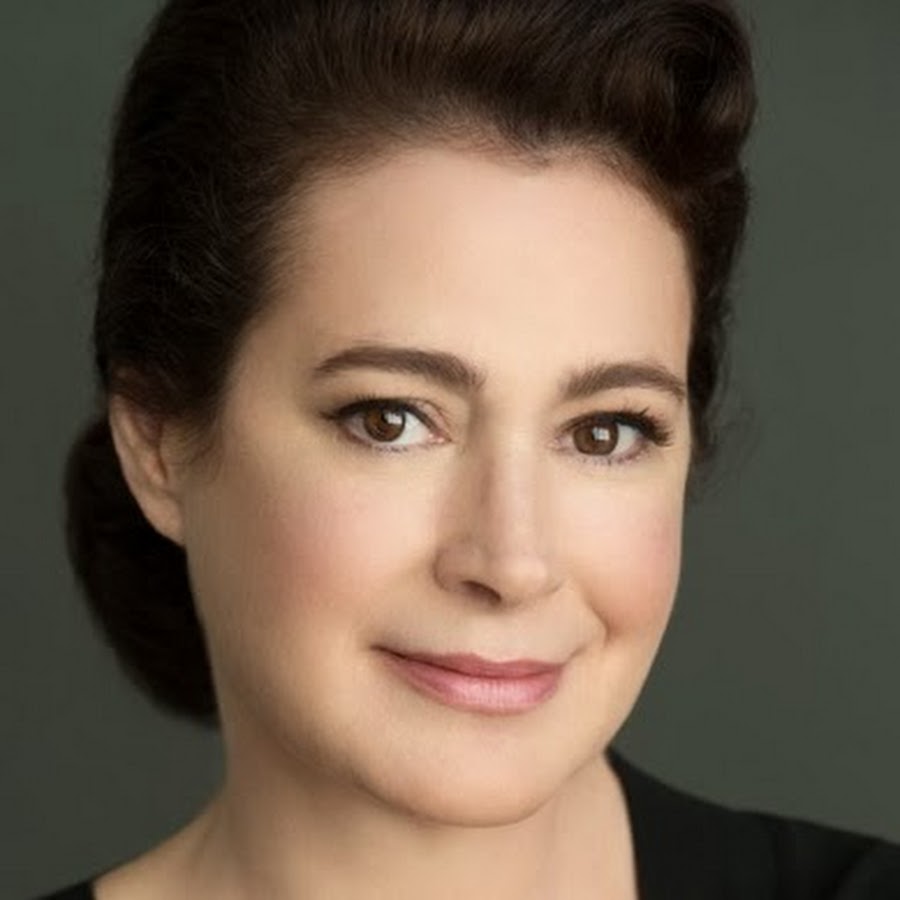
At the Hollywood Show in January 2025, she appeared alongside Blade Runner co-star Joanna Cassidy, signing autographs and charming fans. Her triumphant return to London Film & Comic Con in July 2025—her first major appearance in over two years—drew crowds who marvelled that the 65-year-old, now platinum blonde, still radiated that glacial beauty.
She's 66 now. Reflective. At peace with battles she didn't win and wars she survived.
The honesty remains. The filter, apparently, never arrived. But she's forgiven. Or at least moved on.
"I'm still alive."
A statement that doubles as victory and resignation.
The Real Story
Because Sean Young's story isn't really about eccentricity or self-sabotage. It's about an industry that punished women for the same behaviour it rewarded in men. It's about powerful men who retaliated against rejection with career annihilation. It's about a media machine that preferred the narrative of "crazy actress" to the uncomfortable truth of systemic abuse.
She endures as a cult icon because Blade Runner refuses to fade. Because Rachael's question—"You think I'm a replicant, don't you?"—still resonates. Because Young's performance contained something authentic beneath the artifice.
Hollywood tried to erase her. She wouldn't let them.
The replicant survived after all.
Sources
- Sean Young Wikipedia: https://en.wikipedia.org/wiki/Sean_Young
- Mercury News - James Woods lawsuit: https://www.mercurynews.com/2021/03/24/sean-young-gets-the-last-word-on-james-woods/
- Cheat Sheet - Woods lawsuit details: https://www.cheatsheet.com/news/james-woods-lost-lawsuit-against-co-star-sued-stalking.html/
- Variety - Harvey Weinstein allegations: https://variety.com/2017/film/news/sean-young-harvey-weinstein-sexual-harassment-1202595284/
- IndieWire - Weinstein incident: https://www.indiewire.com/features/general/sean-young-blade-runner-harvey-weinstein-sexual-harassment-1201889566/
- Far Out Magazine - Hollywood career analysis: https://faroutmagazine.co.uk/why-sean-young-left-hollywood/
- Film Quarterly - Academic career study: https://filmquarterly.org/2020/09/23/conspiracy-paranoia-metoo-and-the-reparative-work-of-sean-youngs-catwoman/
- Throwbacks - Career decline overview: https://www.throwbacks.com/sean-young-where-are-they-now/
- London Film & Comic Con official: https://londonfilmandcomiccon.com/guest/sean-young/
- Alamy Photos - July 2025 appearance: https://www.alamy.com/london-uk-05th-july-2025-sean-young-attends-the-showmasters-london-film-comic-con-at-olympia-credit-sopa-images-limitedalamy-live-news-image684797882.html
- Roster Con - Hollywood Show January 2025: https://www.rostercon.com/en/event-convention/hollywood-show-los-angeles-january-2025
Which Sean Young performance do you remember most—Rachael in Blade Runner, Kate Gekko in Wall Street, or her electric chemistry with Kevin Costner in No Way Out? Share your thoughts below.